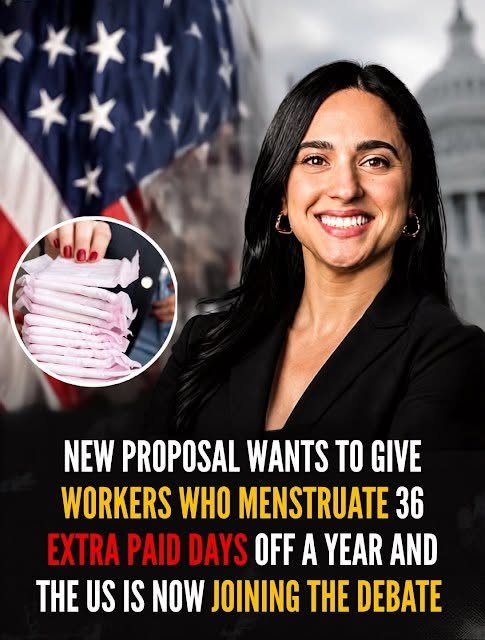
📰⚖️ Proposal for 36 Additional Paid Days Off for Menstruating Workers Sparks Debate in the U.S. ⚖️📰
A proposal involving additional paid leave for menstruating workers has become a major topic of discussion across the United States. 🇺🇸💬 Supporters and critics alike are sharing their perspectives, making it one of the most talked-about workplace issues in recent memory. 👀📢
The proposal would provide eligible workers with additional paid days off related to menstrual health, aiming to address challenges that some individuals experience during their menstrual cycles. 🩺🌸 Advocates argue that such policies could help improve employee well-being, workplace inclusivity, and overall quality of life. ❤️🏢
Others have raised questions about how such a policy might be implemented, how it would affect businesses, and what impact it could have on workplace operations. 📋🤔 Discussions have also focused on balancing employee needs with organizational responsibilities. ⚖️🏭
Across social media and news platforms, people are sharing a wide range of opinions and personal experiences. 📱💭 Some see the proposal as an important step toward recognizing health-related challenges in the workplace, while others are debating practical considerations and potential outcomes. 🌍🗣️
The conversation highlights how workplace policies continue to evolve as societies explore new approaches to employee health, wellness, and support. 🌟🤝 Regardless of individual viewpoints, the proposal has sparked meaningful discussions about how employers can best accommodate the diverse needs of their workforce. 💼❤️
As the debate continues, policymakers, employers, employees, and advocacy groups will likely remain engaged in conversations about fairness, implementation, and workplace well-being. 🏛️📖
🌸✨ One proposal, countless opinions, and an ongoing conversation about the fu