Your Nails Could Be Sending Warning Signs — Especially After 40
Have you ever looked at your fingernails and noticed that they seem different than they did a few years ago? Perhaps they break more easily, develop ridges, change color, or grow more slowly than before.
It may be tempting to dismiss these changes as a normal part of getting older. And sometimes, that is exactly what they are. But your nails can occasionally reveal clues about your general health, making persistent or unusual changes worth paying attention to—especially after age 40.
Your nails alone cannot diagnose a medical condition. However, knowing what to look for can help you recognize when it is time to speak with a healthcare professional.
1. Brittle Nails That Break Easily
Do your nails split, peel, or snap even when you are not doing anything strenuous?
Brittle nails are common and can become more noticeable with age. Frequent handwashing, cleaning products, repeated exposure to water, and dry weather can weaken the nail plate.
Sometimes, however, persistent brittleness may be associated with iron deficiency, thyroid disorders, or other health concerns.
What you can do: Moisturize your nails and cuticles regularly, wear gloves when using cleaning products, and avoid excessive filing or repeated gel manicures. If the problem persists or occurs alongside fatigue, weakness, or other symptoms, ask your healthcare professional whether testing is appropriate.
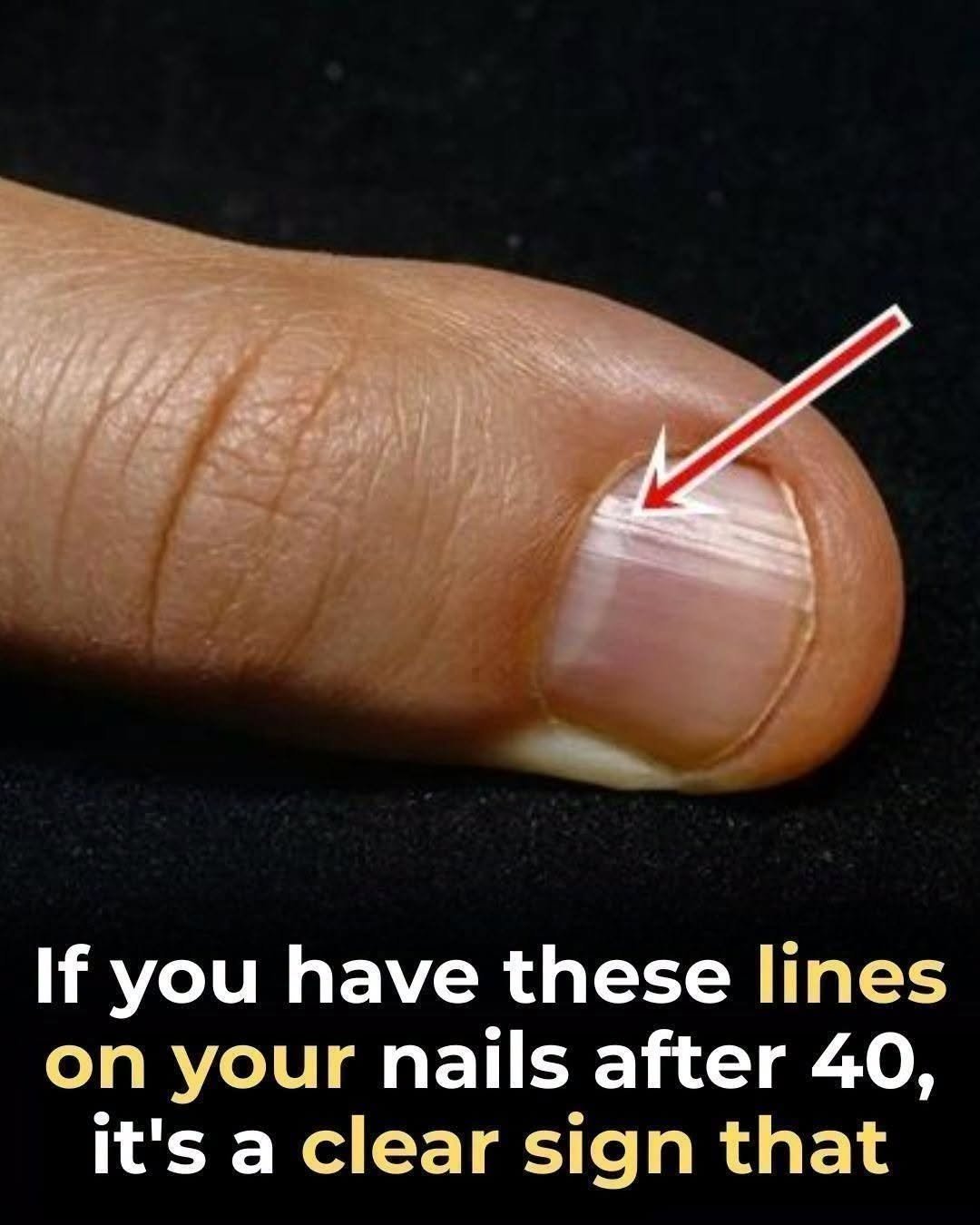
2. New Ridges Across Your Nails
Not all nail ridges mean the same thing.
Vertical ridges running from the cuticle toward the nail tip are common and often become more noticeable with age. They are usually harmless, particularly when they develop gradually.
Horizontal grooves, sometimes called Beau’s lines, can occur when nail growth temporarily slows because of a significant illness, injury, or other physical stress.
Pay attention to sudden changes. Several deep horizontal grooves appearing across multiple nails may deserve medical evaluation, especially if they follow an illness or accompany other symptoms.
3. Pale Nails or Unusual Color Changes
Healthy nails vary naturally in appearance, but a significant change in color can sometimes provide a useful health clue.
Very pale nail beds may occur with anemia, although appearance alone cannot confirm low iron levels. Yellow nails can result from nail polish, fungal infections, or other conditions. Blue or gray discoloration may indicate reduced oxygen levels or circulation problems.
When to seek help: Sudden blue or gray discoloration accompanied by shortness of breath, chest pain, confusion, or blue lips requires emergency medical attention.
Persistent unexplained color changes should be assessed by a healthcare professional rather than treated with cosmetic products alone.
4. Nails That Become Thick or Distorted
If your toenails or fingernails become unusually thick, crumbly, discolored, or difficult to trim, a fungal infection may be responsible.
Other possible causes include repeated pressure from footwear, nail injuries, and inflammatory skin conditions such as psoriasis.
Fungal infections become more common with age, but thick nails should not automatically be assumed to be fungal.
What helps: Keep nails clean and dry, wear properly fitting shoes, and seek advice about testing before beginning treatment. Some nail conditions look similar but require different approaches.
5. Spoon-Shaped Nails
Spoon-shaped nails, known medically as koilonychia, curve inward and may appear as though they could hold a drop of water.
This unusual shape can be associated with iron-deficiency anemia. It may also have other causes, including certain inherited nail characteristics or repeated exposure to particular substances.
If you notice a new spoon-like shape, especially across several nails, arrange a medical assessment. A clinician may recommend blood tests to investigate iron levels and identify the underlying cause.
Do not begin taking iron supplements without appropriate advice, because excess iron can be harmful.
6. Clubbing: Rounded Fingertips and Curved Nails
Nail clubbing occurs when the fingertips become enlarged and the nails curve more noticeably around them.
Unlike ordinary age-related ridges, newly developing clubbing can sometimes be associated with lung disease, heart conditions, or gastrointestinal disorders.
Not everyone with naturally curved nails has clubbing. The important distinction is whether the shape of your fingertips and nails has changed over time.
Seek medical evaluation if you notice new clubbing, particularly if it occurs alongside a persistent cough, breathing difficulties, or unexplained weight loss.
7. White Spots on Your Nails
Small white spots often appear after minor injuries to the nail, even when you do not remember bumping it.
They are usually harmless and gradually move toward the tip as the nail grows. Contrary to a common myth, isolated white spots do not automatically mean that you have a calcium deficiency.
If whitening affects large areas of several nails, does not grow out normally, or occurs alongside other changes, a medical assessment can help identify the cause.
8. A Dark Line Under One Nail
A brown or black line beneath a nail can have several explanations, including an injury, a mole, or increased pigment production.
However, a new or changing dark streak—particularly one affecting a single nail—can occasionally be a sign of subungual melanoma, a rare type of skin cancer that develops beneath the nail.
Warning signs include a line that widens, irregular coloring, pigment spreading onto the surrounding skin, or unexplained nail damage.
Do not ignore a new or changing dark streak. Arrange a prompt appointment with a dermatologist or another qualified healthcare professional. Do not assume that it is simply a bruise.
9. Nails That Grow More Slowly
Nail growth can slow with age. Fingernails generally grow faster than toenails, and growth rates vary between individuals.
However, a noticeable change may also reflect illness, nutritional deficiencies, medication effects, or reduced circulation.
If slow growth occurs with persistent fatigue, unexplained weight changes, hair loss, or other new symptoms, discuss the combination with your healthcare professional rather than focusing on the nails alone.
10. Nails That Separate From the Nail Bed
When a nail begins lifting away from the skin underneath, the condition is called onycholysis.
Possible causes include injury, fungal infection, psoriasis, and certain medications. Thyroid disorders can also sometimes be associated with nail separation.
Keep the affected nail short, avoid picking underneath it, and protect it from further injury. If the separation persists, spreads, or develops without an obvious explanation, seek medical advice.
How to Keep Your Nails Healthy After 40
You do not need expensive treatments or complicated routines to care for your nails. A few consistent habits can help protect them.
- Moisturize regularly: Apply hand cream and cuticle moisturizer, particularly after washing your hands.
- Protect your hands: Wear suitable gloves when handling cleaning products or spending long periods with your hands in water.
- Trim carefully: Keep nails at a comfortable length and avoid cutting or pushing back the cuticles aggressively.
- Eat a balanced diet: Include adequate protein, iron-rich foods, vegetables, fruit, and other nutrient-dense foods.
- Avoid unnecessary supplements: Biotin, iron, and other supplements are not appropriate for everyone and may cause problems or interfere with certain laboratory tests or medications.
- Pay attention to changes: Take a photograph if you notice a new mark or change in shape, and monitor whether it grows out or progresses.
When Should You See a Doctor?
Most nail changes are not emergencies. However, arrange a medical appointment for persistent unexplained changes, new nail clubbing, a changing dark streak, or nails that repeatedly separate from the nail bed.
Seek urgent medical care for sudden blue or gray nails accompanied by breathing difficulties or other signs of low oxygen.
If several nail changes appear together with symptoms such as unusual tiredness, weakness, shortness of breath, or unexplained weight loss, tell your healthcare professional about all of them. The combination may be more informative than any single nail symptom.
The Bottom Line
After 40, your nails may become more brittle, develop vertical ridges, or grow more slowly. These changes are often harmless and do not automatically indicate illness.
Still, new, persistent, or unusual changes deserve attention. Your nails are only one part of the picture, but noticing changes early can help you decide when professional advice is worthwhile.
The most important lesson is simple: Do not panic over every ridge or white spot, but do not ignore a significant change just because you assume it is part of getting older.