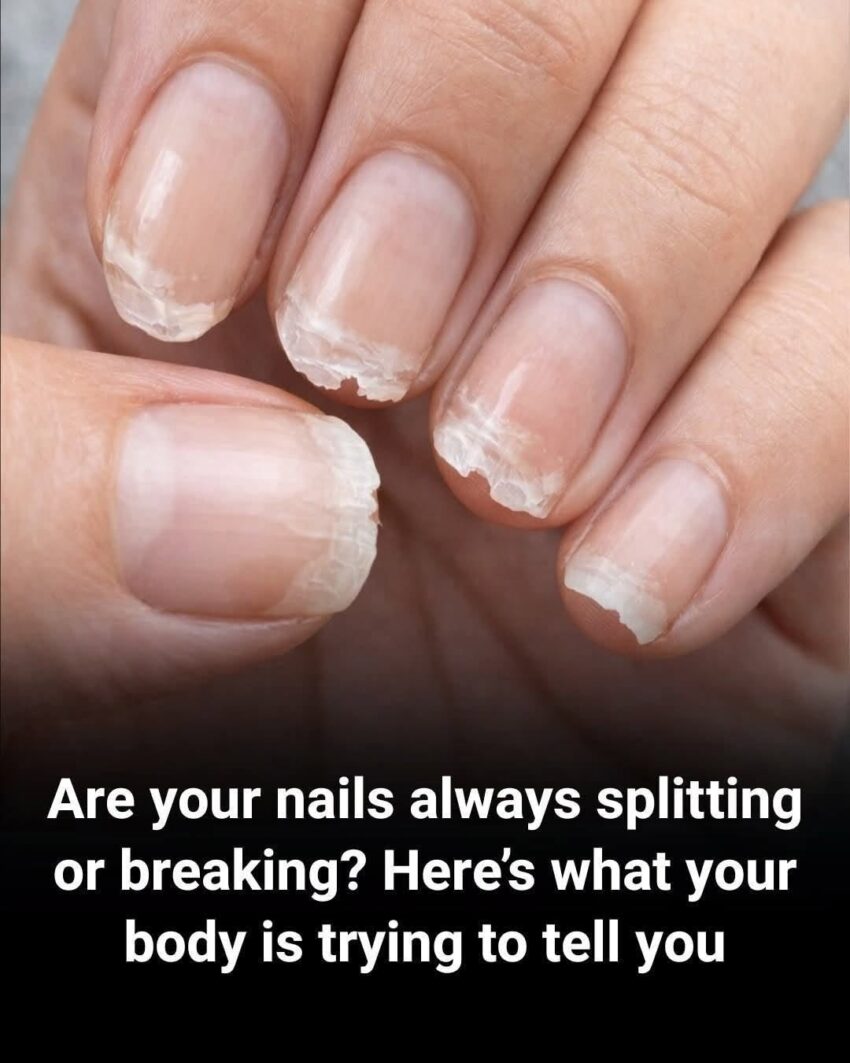
Weak or Brittle Nails: What Your Body Is Trying to Tell You
Your nails may seem like a small part of your body, but changes in their appearance can sometimes provide clues about your health.
If your nails are suddenly peeling, splitting, cracking, or breaking more easily than usual, it may be caused by something as simple as frequent exposure to water—or it could be related to an underlying nutritional, hormonal, skin, or medical issue.
Here are some common possibilities to consider.
1. Your Nails May Be Too Dry
Repeated exposure to water, soap, detergents, or cleaning chemicals can remove moisture from the nails and surrounding skin.
This is particularly common in people who wash their hands frequently or spend a lot of time doing household chores.
What may help:
Wear protective gloves when using cleaning products, avoid excessively hot water, and apply a moisturizing cream or nail oil regularly.
2. You May Not Be Getting Enough Iron
Iron deficiency can sometimes be associated with nail changes, including thin or brittle nails.
Some people with significant iron deficiency develop nails that become unusually thin or develop a spoon-shaped appearance, known as koilonychia.
However, brittle nails alone do not prove that you have an iron deficiency.
If you also experience unusual tiredness, weakness, dizziness, shortness of breath, or pale skin, talk to a healthcare professional about whether blood testing is appropriate.
3. Your Diet May Need Attention
Healthy nails require adequate nutrition.
Insufficient protein or certain nutrient deficiencies can affect nail growth and appearance. However, taking supplements without knowing whether you are deficient is not always helpful and can sometimes be harmful.
Instead, focus on a balanced diet containing protein, vegetables, fruits, whole grains, legumes, and healthy sources of fats.
If your nails have changed significantly despite eating well, a healthcare professional can help determine whether testing is necessary.
4. Your Thyroid Could Be Involved
Thyroid disorders can cause changes in the skin, hair, and nails.
Some people with thyroid problems notice dry skin, changes in hair texture, or nails that become more fragile.
Brittle nails by themselves aren’t enough to diagnose a thyroid disorder. But if nail changes occur alongside unexplained weight changes, unusual fatigue, temperature sensitivity, changes in heart rate, or other persistent symptoms, consider discussing them with your doctor.
5. Nail Products May Be Damaging Them
Frequent manicures, gel or acrylic nails, aggressive filing, acetone-based removers, and repeated removal of artificial nails can weaken the nail plate.
The problem isn’t necessarily the occasional manicure. Repeated chemical exposure or physical trauma can leave nails dry, thin, and prone to splitting.
Give your nails breaks between treatments when possible, and avoid aggressively scraping or buffing the nail surface.
6. A Skin Condition Could Be Affecting Your Nails
Conditions such as eczema and psoriasis can affect the nails.
You might notice pitting, ridges, discoloration, thickening, crumbling, or separation of the nail from the nail bed.
Fungal infections can also cause nails to become thick, brittle, discolored, or crumbly.
If a nail is persistently changing in appearance, especially if only one or two nails are affected, it is worth having it examined rather than assuming the problem is nutritional.
7. You May Be Picking or Biting Your Nails
Repeated biting, picking, or cutting the cuticles can damage the nail and the surrounding tissue.
Small injuries may also allow bacteria or fungi to enter.
Try keeping nails trimmed, moisturizing the cuticles, and avoiding picking at peeling areas.
When Should You See a Doctor?
Brittle nails are often harmless, particularly when they result from dryness, frequent washing, or cosmetic treatments.
However, make an appointment with a healthcare professional if:
- Nail changes persist or continue getting worse
- Several nails change at the same time
- Nails become spoon-shaped, severely discolored, or distorted
- You develop pain, swelling, bleeding, or drainage
- A nail separates from the nail bed
- You have other unexplained symptoms
- A dark streak appears under a nail and does not grow out normally
A healthcare professional can examine your nails and, when appropriate, order tests to look for conditions such as iron deficiency or thyroid disease.
Simple Habits for Stronger Nails
You don’t need an expensive nail routine to protect your nails.
Try these simple habits:
Keep them moisturized. Apply hand cream or nail oil regularly.
Protect them from chemicals. Wear gloves when cleaning or washing dishes.
Don’t use nails as tools. Opening cans or scraping surfaces can cause tiny injuries.
Avoid aggressive filing. File gently in one direction rather than repeatedly sawing back and forth.
Limit harsh treatments. Give your nails occasional breaks from gels, acrylics, and frequent acetone exposure.
Eat a balanced diet. Adequate protein and overall good nutrition support normal nail growth.
Don’t self-prescribe supplements. If you suspect a deficiency, testing and professional advice are safer than taking high-dose supplements on your own.
The Bottom Line
Weak or brittle nails don’t automatically mean something is wrong with your health.
Often, the explanation is simple: dryness, frequent water exposure, chemicals, or cosmetic treatments.
But persistent or unusual nail changes can sometimes accompany nutritional deficiencies, skin disorders, thyroid problems, infections, or other medical conditions.
Your nails aren’t a diagnosis—but they can be a reason to pay closer attention to your overall health.
If a change is new, persistent, or accompanied by other symptoms, don’t ignore it. A healthcare professional can help determine what your nails are really trying to tell you.