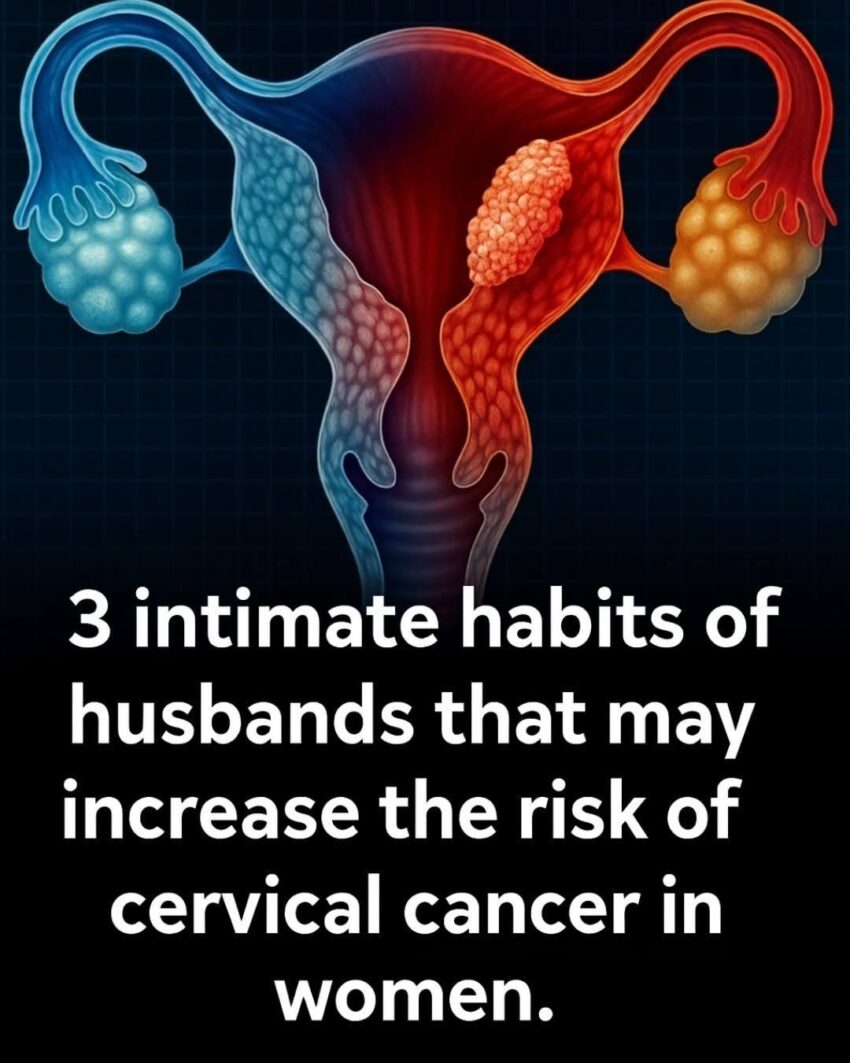
3 Male Habits That Can Increase Cervical Cancer Risk in Their Partners
Cervical cancer is often discussed as a women’s health issue, but prevention is a shared responsibility.
Almost all cervical cancer cases are linked to persistent infection with high-risk types of human papillomavirus (HPV), a very common virus transmitted through sexual contact. Most HPV infections disappear naturally, but persistent high-risk infection can eventually cause precancerous changes and cancer.
That means some behaviors in male partners can indirectly increase a woman’s exposure to HPV or make prevention more difficult.
1. Having Multiple Sexual Partners Without Protection
A man’s number of sexual partners can affect his likelihood of acquiring HPV and subsequently transmitting it to a partner.
WHO guidance identifies a greater lifetime number of sexual partners in men as an important risk factor for HPV infection. Having multiple partners increases the number of opportunities for exposure to HPV and other sexually transmitted infections.
This does not mean that having a certain number of partners guarantees HPV infection or cervical cancer. HPV is extremely common, and it can be transmitted by someone who has no symptoms and may not know they carry it.
What can couples do?
Open communication about sexual health, mutually agreed safer-sex practices, and appropriate STI prevention can reduce risk.
Condoms can lower the likelihood of HPV transmission, although they cannot provide complete protection because HPV can infect skin that a condom does not cover.
2. Smoking Around a Partner
Smoking is another behavior worth taking seriously.
Research and public-health guidance have associated tobacco exposure with HPV infection and persistence. Tobacco-related chemicals can reach cervical tissue, and smoking can interfere with the body’s ability to fight infections.
Importantly, the strongest direct evidence concerns the woman smoking herself. A man smoking does not mean that his partner will develop cervical cancer. However, secondhand smoke exposure is harmful to health, and quitting smoking is beneficial for both partners.
For men who smoke, quitting is one of the healthiest changes they can make—for themselves and for the people around them.
3. Ignoring HPV Prevention
One of the biggest problems is simply not taking HPV seriously.
HPV can affect both men and women. It frequently causes no symptoms, so a man may carry and transmit the virus without realizing it. Certain HPV types are associated with cancers in both sexes, while persistent infection with high-risk HPV can cause cervical cancer in women.
Men can therefore play an important role in prevention by discussing HPV vaccination, practicing safer sex, avoiding tobacco, and encouraging their partners to follow recommended cervical screening.
HPV Vaccination Matters
HPV vaccination is one of the most effective ways to prevent HPV-related disease.
WHO recommends HPV vaccination as a key part of cervical cancer prevention. Vaccination is most effective when given before exposure to HPV, although recommendations for age groups and catch-up vaccination vary by country.
Men should also ask a healthcare professional whether HPV vaccination is appropriate for them.
The Most Important Protection: Screening
Even when partners take precautions, HPV exposure cannot always be prevented.
That’s why cervical screening remains essential.
Screening can identify precancerous changes before they become cervical cancer. WHO’s current guidance emphasizes HPV-based testing as an important approach to cervical cancer prevention, alongside appropriate follow-up and treatment.
Women should follow the screening schedule recommended by their local health authority or healthcare professional.
A Final Reminder
Cervical cancer should never be framed as something a woman gets because of a man’s behavior.
HPV is extremely common, and infection can occur even in people who have had only one sexual partner. A diagnosis of HPV also does not automatically indicate infidelity.
The better message is that both partners can participate in prevention.
Men can reduce risk by practicing safer sex, considering HPV vaccination, avoiding smoking, communicating honestly about sexual health, and supporting their partners in getting appropriate cervical screening.
And women should remember: regular screening and HPV vaccination can prevent many cervical cancers.
If you have concerns about HPV, abnormal screening results, or your personal risk of cervical cancer, speak with a qualified healthcare professional rather than relying on online information alone.