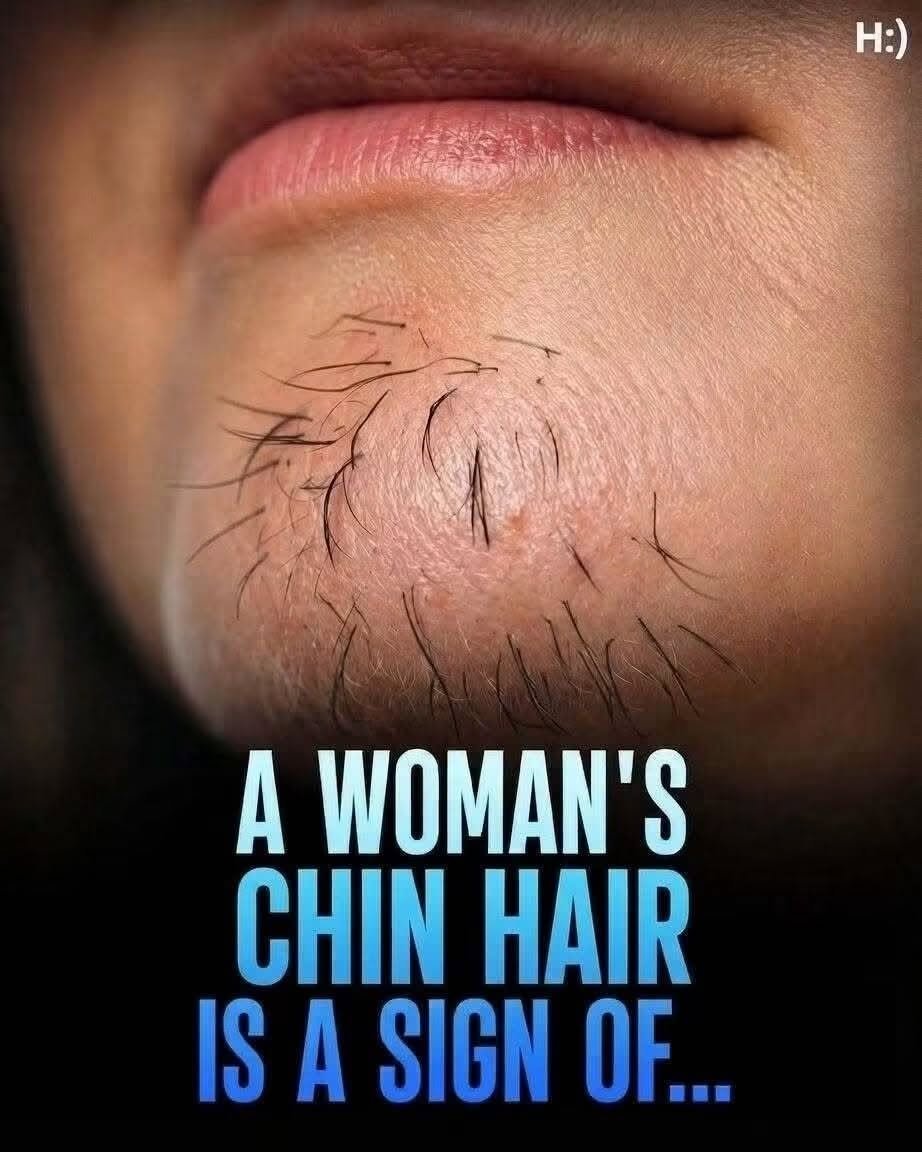
A Woman’s Chin Hair Could Be a Sign of More Than Just Aging, Experts Say
Noticing a few coarse hairs on your chin can be surprising, especially if you have never had them before. Many women assume that chin hair is simply an unavoidable part of getting older. While age and hormonal changes can certainly play a role, there are other possible explanations.
In some cases, increased facial hair can be associated with changes in androgen hormones or an underlying medical condition. However, a few stray chin hairs are extremely common and usually do not indicate a serious health problem.
Here is what experts want women to understand about chin hair, hormones, and when it may be worth seeking medical advice.
1. Hormonal Changes Can Make Chin Hair More Noticeable
Women naturally produce androgens, including testosterone, although generally at lower levels than men.
Hair follicles in certain areas of the face are sensitive to these hormones. When hormone levels change—or when follicles become more sensitive to normal hormone levels—fine hairs may gradually become thicker, darker, and coarser.
This can happen during different stages of life, including perimenopause and menopause.
A few isolated hairs are generally normal. More extensive or rapidly increasing facial hair may warrant further evaluation.
2. Polycystic Ovary Syndrome (PCOS) May Be One Possible Cause
Polycystic ovary syndrome, commonly called PCOS, is a hormonal condition that can affect menstrual cycles, ovulation, skin, and hair growth.
Some women with PCOS experience hirsutism, which means excessive growth of coarse hair in areas where men typically grow more hair, such as the chin, upper lip, chest, or abdomen.
Other possible signs include:
- Irregular or absent menstrual periods.
- Persistent acne.
- Thinning hair on the scalp.
- Difficulty ovulating or becoming pregnant.
Not everyone with PCOS experiences all these symptoms, and chin hair alone is not enough to diagnose the condition.
If several of these changes occur together, a healthcare professional can help determine whether hormonal testing or other assessment is appropriate.