If You Have These 9 Symptoms in Your Feet, It Could Be a Sign of an Underlying Health Problem
Your feet do more than carry you from place to place. They can sometimes reveal clues about your circulation, nerves, skin health, and overall well-being.
A burning sensation, persistent swelling, unusual color changes, or a wound that refuses to heal may have several possible explanations. Some are relatively minor, while others deserve prompt medical attention.
The important thing to remember is that foot symptoms do not automatically mean you have a serious disease. What matters is how long they last, whether they are getting worse, and whether other symptoms appear alongside them.
Here are nine foot symptoms worth paying attention to.
1. Cold Feet That Stay Cold
Do your feet often feel cold even when the room is warm?
Cold feet can result from low temperatures, certain medications, or conditions that affect blood vessels. In some cases, persistently cold feet may be associated with reduced circulation, including peripheral artery disease.
If one foot suddenly becomes cold, pale, painful, numb, or weak, seek emergency medical care because this can indicate an abrupt loss of blood flow.
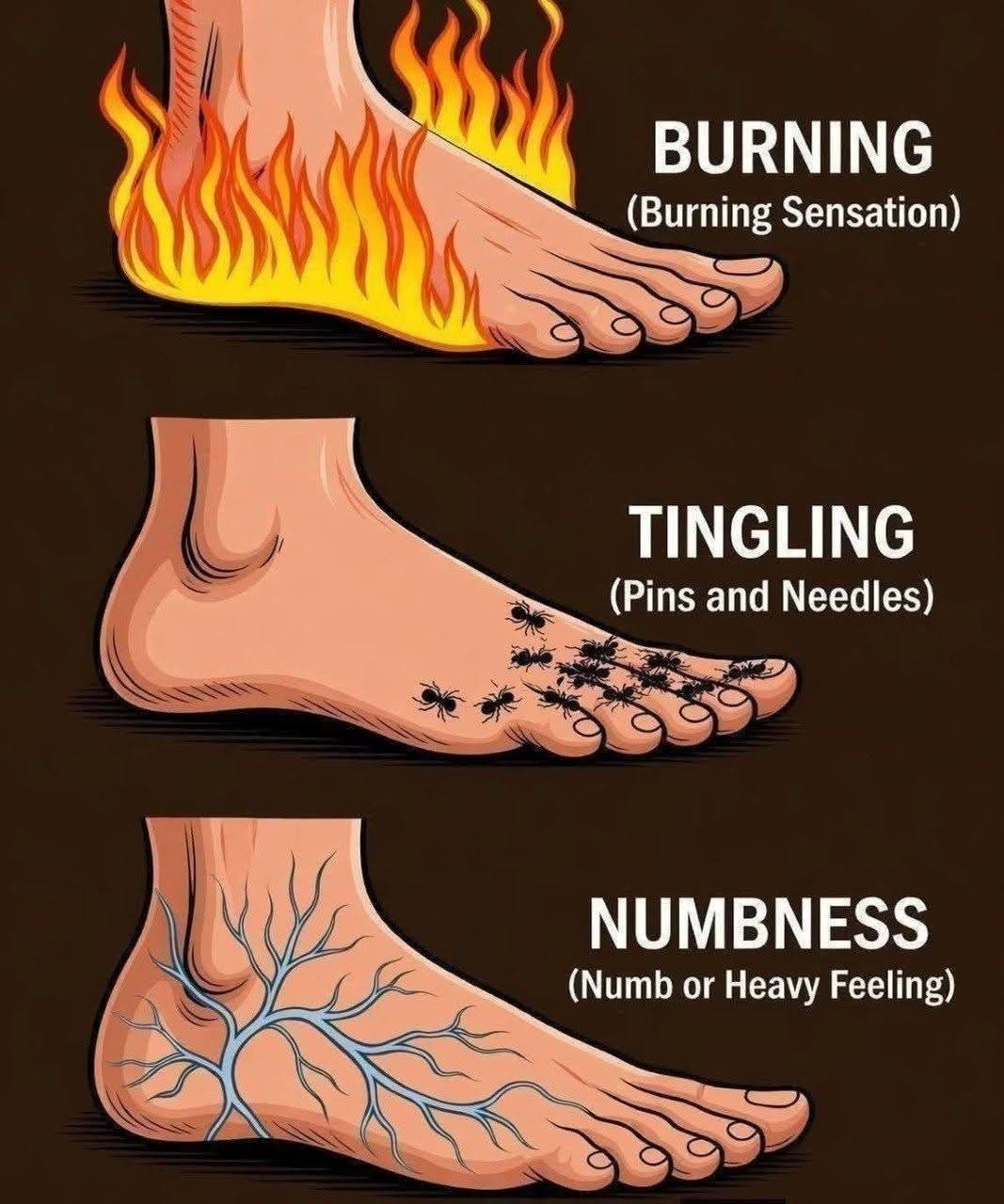
2. Burning or Tingling in Your Feet
A burning sensation, pins and needles, or unusual tingling may indicate irritation or damage involving the nerves.
Possible causes include diabetes-related neuropathy, vitamin B12 deficiency, nerve compression, and certain medications.
If these sensations persist, worsen, or interfere with walking or sleep, arrange a medical evaluation. Early assessment can help identify the underlying cause.
3. Swollen Feet or Ankles
Swelling can occur after standing or sitting for long periods, during hot weather, or following certain injuries.
However, persistent swelling may sometimes be associated with problems involving the veins, heart, kidneys, liver, or medications.
Seek urgent medical assessment if one leg becomes newly swollen, painful, warm, or red. Sudden swelling accompanied by chest pain or difficulty breathing requires emergency care.
4. Feet That Change Color
Changes in foot color can offer important clues, although appearance alone cannot establish a diagnosis.
- Pale or bluish feet: May indicate reduced circulation or another problem affecting oxygen delivery.
- Red, warm feet: Can occur with inflammation, infection, or other conditions.
- Darkened skin around the ankles: May be associated with chronic venous insufficiency.
- Yellowish, thickened toenails: May be caused by a fungal infection or other nail disorders.
Sudden blue or unusually pale discoloration, particularly with pain or coldness, requires emergency evaluation.
5. Sores That Refuse to Heal
A cut, blister, or sore on your foot that does not heal properly should not be ignored.
Poor circulation, diabetes, repeated pressure, and nerve damage can all contribute to slow wound healing.
People with diabetes should seek prompt professional advice for new foot wounds, even if the wound does not hurt. Nerve damage can reduce the ability to feel an injury.
Do not wait for a wound to become painful before seeking help.
6. Numbness or Loss of Sensation
If you cannot feel the floor properly, struggle to notice temperature changes, or re