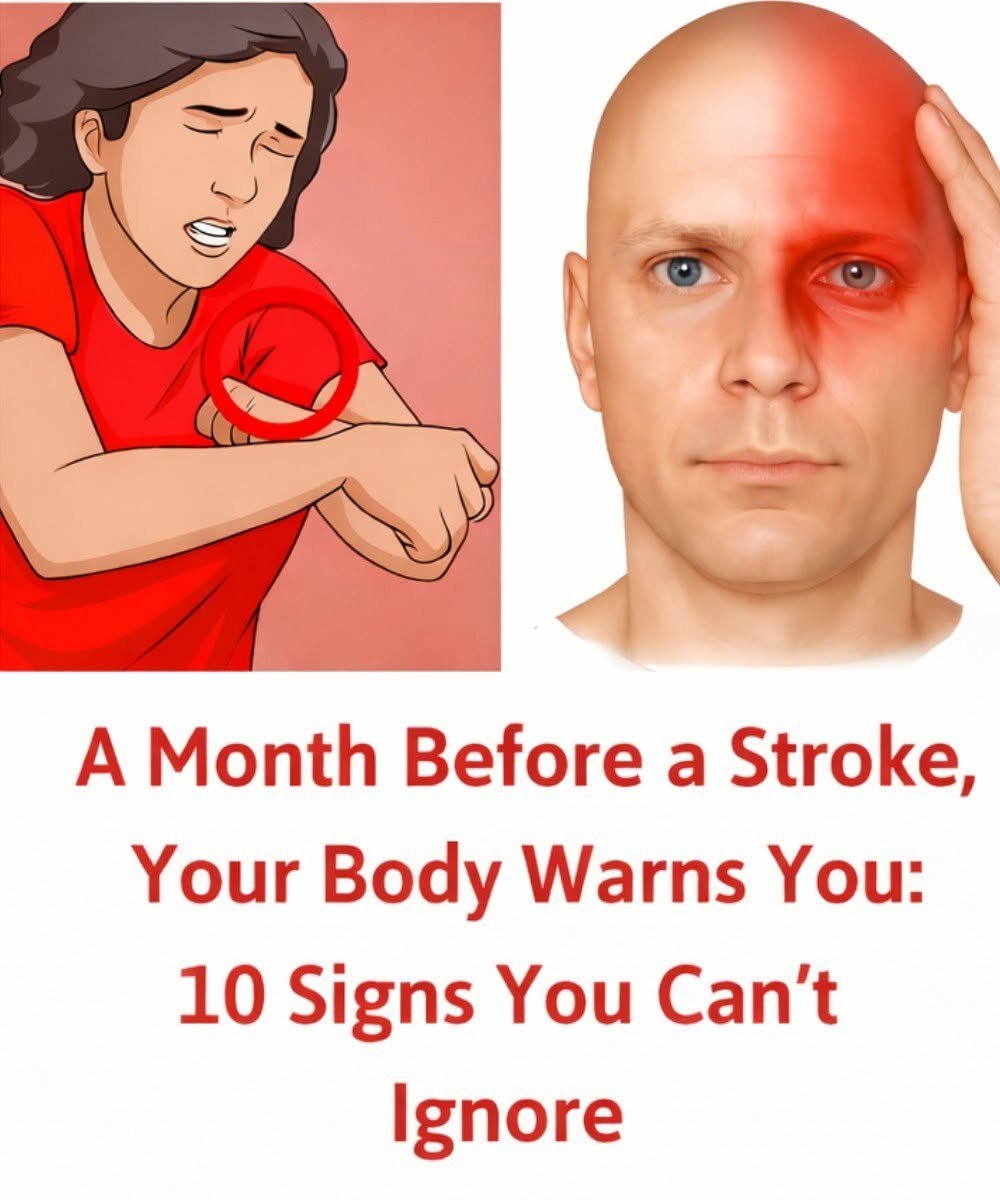
A Month Before a Stroke, Your Body May Show Warning Signs: 10 Symptoms You Should Never Ignore
A stroke can happen suddenly, sometimes without any obvious warning. In some cases, however, a person may experience symptoms days or even weeks beforehand that could signal an increased risk of a serious medical problem.
Recognizing these symptoms is important because prompt medical attention can help prevent complications and save lives.
One important fact: There is no reliable checklist of 10 symptoms that consistently appears one month before a stroke. Some people experience a transient ischemic attack (TIA), sometimes called a mini-stroke, before a major stroke. A TIA causes temporary stroke-like symptoms and is a medical emergency, even if the symptoms disappear.
Here are 10 symptoms worth understanding and knowing when to seek help.
1. Sudden Weakness or Numbness on One Side
Sudden weakness, tingling, or numbness in the face, arm, or leg—particularly on one side of the body—can be a warning sign of a stroke.
A person may struggle to lift one arm, hold an object, or move one side of their face normally.
What to do: Seek emergency medical help immediately, even if the weakness improves.
2. Difficulty Speaking or Understanding Others
Suddenly slurring words, struggling to form sentences, or being unable to understand familiar conversations can indicate that a stroke is affecting the brain.
The person may know what they want to say but find it difficult to express themselves.
Do not assume the problem is simply tiredness, stress, or aging if it begins suddenly.
3. Sudden Vision Problems
A stroke or TIA may cause sudden blurred vision, double vision, or loss of vision in one or both eyes.
Some people describe a dark curtain covering part of their vision, while others experience difficulty seeing objects clearly.
Sudden vision loss requires urgent medical evaluation, even if sight returns to normal.
4. Unexplained Dizziness or Loss of Balance
Sudden dizziness, difficulty walking, loss of coordination, or an inability to maintain balance can sometimes indicate a stroke, particularly one affecting the brain’s balance centers.
These symptoms can have other causes, too, but sudden severe dizziness accompanied by weakness, vision changes, or difficulty speaking should never be ignored.
5. A Sudden, Severe Headache
A sudden, extremely severe headache—especially one that reaches maximum intensity within seconds or minutes—may indicate bleeding in or around the brain.
This is a medical emergency.
Although not every stroke causes a headache, an unusually severe headache that appears without warning requires immediate medical attention.
6. Confusion or Difficulty Understanding Information
Sudden confusion, disorientation, or difficulty following simple instructions can occur when the brain is affected by a stroke.
The person may seem unusually confused, respond inappropriately, or struggle to understand what others are saying.
If these changes occur suddenly, call emergency services rather than waiting to see whether they resolve.
7. Sudden Trouble Swallowing
A stroke can affect the muscles and nerves involved in swallowing. A person may suddenly cough when drinking, struggle to swallow food, or have difficulty controlling saliva.
Swallowing problems have many possible causes, but sudden onset—especially alongside other neurological symptoms—requires urgent assessment.
Do not give food, drinks, or medication by mouth to someone who may be having a stroke.
8. Unusual Weakness or Extreme Fatigue
Persistent fatigue is common and is not, by itself, a reliable predictor of stroke. However, unexplained weakness or a sudden change in physical ability deserves medical attention.
Pay particular attention if the weakness begins abruptly, affects one side of the body, or occurs with changes in speech, vision, or coordination.
These associated symptoms may indicate an emergency rather than ordinary tiredness.
9. Brief Stroke-Like Symptoms That Disappear
This is one of the most important warning signs to recognize.
A person may suddenly experience facial drooping, arm weakness, difficulty speaking, or vision loss, only for the symptoms to disappear after a few minutes.
This may be a transient ischemic attack (TIA). Even when symptoms disappear completely, a TIA can signal a risk of a future stroke.
Never wait for symptoms to return. Seek emergency medical care immediately.
10. Sudden Changes in Walking or Coordination
A stroke may cause someone to stumble, veer to one side, become unable to walk normally, or lose coordination unexpectedly.
If a person suddenly cannot walk steadily—particularly when the change is accompanied by double vision, dizziness, or difficulty speaking—urgent evaluation is essential.
Do not assume that the symptoms are caused by age, dehydration, or a minor balance problem.
Remember the FAST Stroke Warning Signs
<box border radius=”lg” padding={4} gap={3}>
<row align=start gap={3}>
<AsyncImage query=”medical illustration one sided facial drooping stroke warning sign” aspectRatio=”1:1″ maxWidth=”88px”/>
<box flex=”1″ gap={1}>
**F — Face**
  Ask the person to smile. Does one side of the face droop?
</box>
</row>
<divider color=”subtle”/>
<row align=start gap={3}>
<AsyncImage query=”medical illustration person raising both arms stroke warning sign” aspectRatio=”1:1″ maxWidth=”88px”/>
<box flex=”1″ gap={1}>
**A — Arms**
  Ask the person to raise both arms. Does one arm drift downward?
</box>
</row>
<divider color=”subtle”/>
<row align=start gap={3}>
<AsyncImage query=”medical illustration person speaking stroke speech difficulty warning sign” aspectRatio=”1:1″ maxWidth=”88px”/>
<box flex=”1″ gap={1}>
**S — Speech**
  Is speech slurred, unusual, or difficult to understand?
</box>
</row>
<divider color=”subtle”/>
<row align=start gap={3}>
<AsyncImage query=”emergency medical ambulance responding to stroke emergency” aspectRatio=”1:1″ maxWidth=”88px”/>
<box flex=”1″ gap={1}>
**T — Time**
  Call emergency services immediately. Note when symptoms started or when the person was last known to be well.
</box>
</row>
</box>
A person does not need to show all three symptoms to be having a stroke. Sudden vision problems, severe imbalance, or other new neurological symptoms can also be signs of an emergency.
Who Is at Greater Risk of Stroke?
Certain health conditions and lifestyle factors can increase stroke risk, including:
- High blood pressure
- Diabetes
- High cholesterol
- Smoking
- Atrial fibrillation and certain other heart conditions
- Previous stroke or TIA
- Physical inactivity and some forms of unhealthy diet
- Increasing age and a family history of stroke
Managing blood pressure, controlling diabetes, avoiding tobacco, staying physically active, and taking prescribed medication as directed can help reduce risk.
Final Thoughts
A stroke does not always provide a month of warning. Some strokes occur without recognizable advance symptoms, while others are preceded by a TIA or other sudden neurological changes.
The most important thing to remember is that sudden facial drooping, weakness on one side, speech difficulty, vision loss, or loss of coordination requires immediate emergency assessment—even if the symptoms disappear.
Do not wait for a scheduled appointment or try to treat possible stroke symptoms at home. Prompt treatment can make a critical difference.
Medical note: This article is for general education and does not replace professional medical advice. If someone is experiencing possible stroke symptoms now, contact local emergency services immediately.