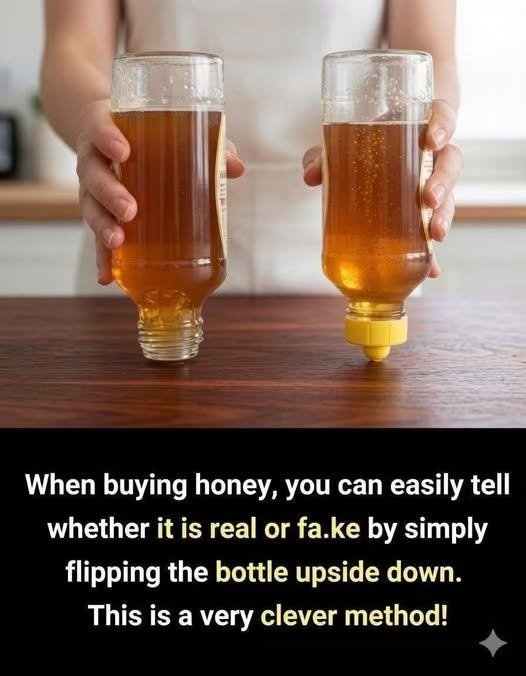
How to Check If Honey Is Real or Fake 🍯 7 Things You Should Know
Honey has been treasured for generations as a natural sweetener, but not every jar labeled “pure honey” is necessarily what it claims to be. Some products may contain added sweeteners, while others may be mislabeled or poorly processed.
So, how can you tell whether the honey in your kitchen is genuine?
There are several popular home tests you may have heard about, but no simple kitchen test can reliably prove that honey is pure or detect every type of adulteration. Still, there are useful ways to make a more informed choice.
1. The Water Test
One popular method involves adding honey to a glass of water.
What to do:
- Fill a clear glass with room-temperature water.
- Add a small spoonful of honey.
- Observe how it behaves as it enters the water.
Some people claim that pure honey settles at the bottom while fake honey dissolves quickly.
The truth: This is not a reliable test. Genuine honey can dissolve in water, and its behavior depends on moisture content, temperature, and other factors. A jar that passes this test is not necessarily pure.
2. The Thumb Test
Another common claim suggests placing a drop of honey on your thumb.
The belief is that genuine honey stays in place while adulterated honey spreads quickly.
However, viscosity varies naturally between different types of honey. Temperature, moisture content, and floral source can all affect how it flows.
The truth: The thumb test cannot reliably distinguish genuine honey from honey containing added sugar syrup.
3. The Crystallization Test
Have you noticed that some honey becomes thick or develops tiny crystals over time?
Crystallization is a natural process in which glucose forms crystals. It commonly occurs in genuine honey, but the speed varies depending on its sugar compos