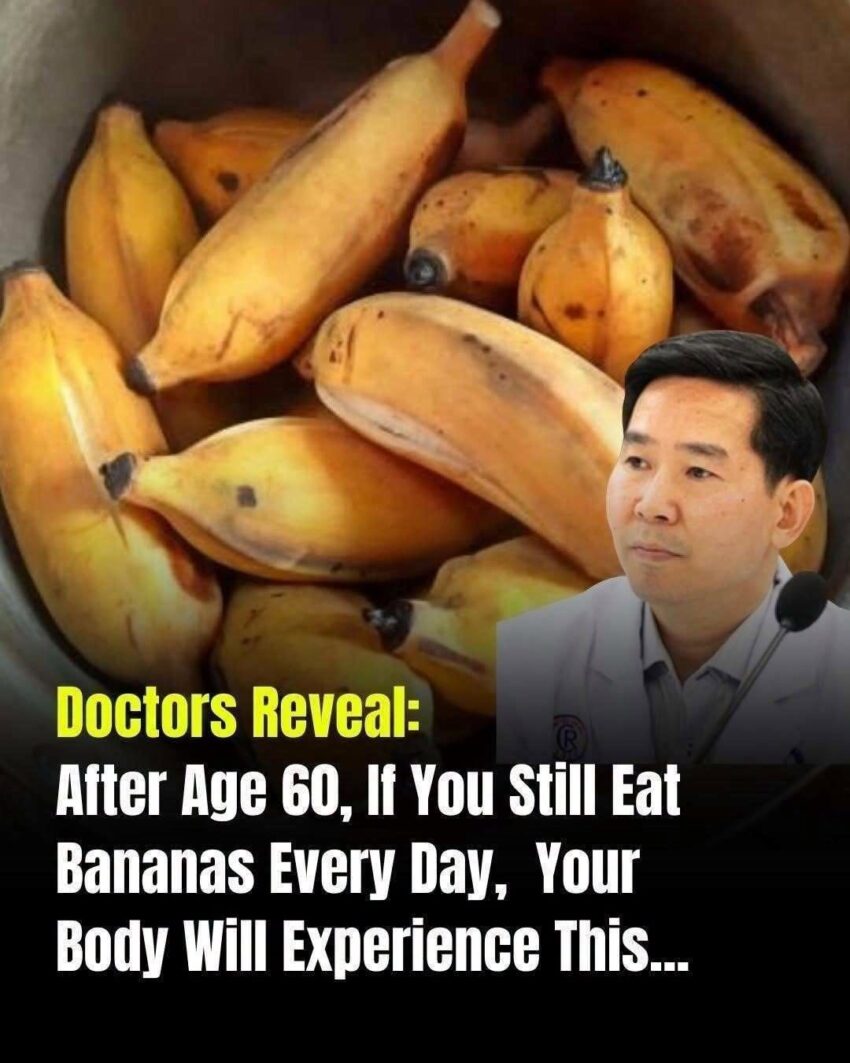
Doctors Reveal: What Happens to Your Body If You Eat Bananas Every Day After 60?
If you’re over 60 and enjoy eating a banana every day, there’s no need to give up this simple fruit just because you’ve reached a certain age.
In fact, bananas can be a nutritious part of a balanced diet. They provide potassium, carbohydrates, vitamin B6, and fiber, and a medium banana contains roughly 422 milligrams of potassium.
But there’s an important detail that viral health headlines often leave out:
There is nothing uniquely dangerous or miraculous about eating a banana after age 60.
What matters is your overall diet and your individual health.
1. You Get a Useful Source of Potassium
Potassium is essential for normal nerve function, muscle contraction, and heart and kidney function.
Adults over 50 have adequate-intake targets of about 3,400 mg per day for men and 2,600 mg for women. A medium banana contributes about 422 mg.
That doesn’t mean you should eat bananas all day to reach your potassium target.
A banana is simply one convenient source among many.
Potatoes, beans, yogurt, spinach, tomatoes, fish, and other foods can contribute potassium too.
2. Your Diet Gets Some Extra Fiber
Bananas contain dietary fiber, which can contribute to a healthy eating pattern.
As we get older, maintaining a varied diet containing fruits, vegetables, whole grains, legumes, and other fiber-rich foods becomes especially important.
A banana can be an easy addition to breakfast, a snack, or a smoothie.
But remember that one food shouldn’t be expected to solve every nutritional problem.
Variety is more important than eating one “superfood” every day.
3. It Can Be an Easy Source of Energy
A banana contains naturally occurring carbohydrates, making it a convenient source of energy.
That’s particularly useful as a snack before physical activity or when you want something quick and filling without reaching for highly processed sweets.
Pairing a banana with protein or healthy fat—such as plain yogurt or a small portion of nuts—can make it a more substantial snack.
4. Potassium and Blood Pressure
Potassium has an important relationship with blood pressure.
The National Institutes of Health notes that higher potassium intake, particularly when paired with lower sodium intake, may help support healthy blood pressure and reduce stroke risk.
But eating a banana isn’t a treatment for high blood pressure.
Think of it as one small part of an overall healthy dietary pattern.
5. One Banana Isn’t Enough to Meet Your Potassium Needs
This is where some online headlines go too far.
You may see claims suggesting that eating a banana every day will provide all the potassium your body needs.
It won’t.
A medium banana has about 420–422 mg of potassium, while adults generally need thousands of milligrams each day from their entire diet.
So don’t turn bananas into a nutritional obsession.
Eat them alongside a variety of other nutritious foods.
6. There Is One Important Exception
For most healthy people with normal kidney function, potassium from foods isn’t considered harmful.
However, people with chronic kidney disease or certain medical conditions, as well as people taking medications that reduce potassium excretion, may develop dangerously high potassium levels.
The NIH specifically warns that people with impaired potassium excretion need individualized guidance about potassium intake.
This is especially important for older adults, because some people over 60 take medications or have medical conditions that affect potassium balance.
If your doctor has told you to follow a low-potassium diet, don’t assume that bananas are automatically safe simply because they’re a fruit.
Ask your doctor or dietitian how much potassium is appropriate for you.
So, Should You Eat a Banana Every Day After 60?
For many healthy adults, yes, a banana can comfortably fit into a balanced diet.
But you don’t need to eat one every day to be healthy.
You also don’t need to avoid bananas simply because you’ve turned 60.
The bigger picture matters much more.
Eat a variety of fruits and vegetables.
Choose nutritious sources of protein.
Include whole grains and legumes where appropriate.
Stay physically active.
Drink enough fluids.
And follow any dietary recommendations your healthcare professional has given you.
The Real Lesson
The internet loves dramatic headlines:
“After 60, NEVER eat bananas!”
Or:
“Eat bananas every day and reverse aging!”
Neither message tells the whole story.
A banana is simply a nutritious food.
For many older adults, it can be an easy way to add potassium, fiber, and other nutrients to the diet. But your individual medical conditions, medications, kidney function, and overall eating pattern matter more than your age alone.
So if you enjoy your daily banana, there’s generally no reason to panic.
Just remember:
Healthy aging isn’t about finding one magical food. It’s about building healthy habits that you can maintain for years.