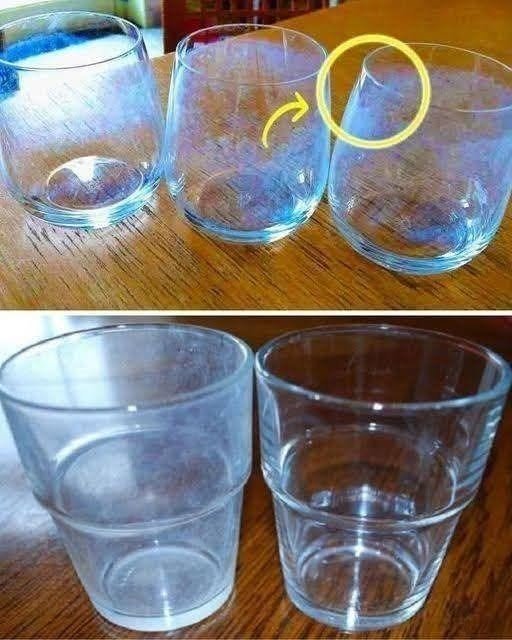
Here’s How to Remove White Patina from Glasses and Make Them Shine With a Simple Trick
Have you ever taken a glass out of the dishwasher only to find it covered in a cloudy white film? Even after washing, your favorite drinking glasses may look dull, spotted, or dirty.
The good news is that this cloudy appearance can sometimes be improved with a few simple household cleaning methods. Before throwing away your glasses, find out what causes the white residue and how to deal with it safely.
Why Do Glasses Develop a White Film?
There are several possible reasons your glasses lose their shine:
- Hard water deposits: Minerals such as calcium and magnesium can leave white spots when water evaporates.
- Dishwasher detergent residue: Excess detergent or an unsuitable wash cycle can leave a cloudy film.
- Glass corrosion: Repeated exposure to high temperatures, alkaline detergents, and prolonged dishwasher cycles can permanently damage the glass surface.
Identifying the cause is important because mineral deposits can often be removed, while permanently etched glass usually cannot be restored to its original clarity.
The Simple Vinegar Trick
White vinegar can help dissolve certain mineral deposits caused by hard water.
What You Need
- White vinegar
- A soft microfiber cloth
- Lukewarm water
- A clean towel
Step 1: Prepare a Vinegar Solution
Mix equal parts white vinegar and lukewarm water in a small bowl.
Step 2: Soak or Wipe the Glass
For ordinary drinking glasses, soak them in the solution for approximately 10–15 minutes, or wipe the cloudy areas with a vinegar-dampened cloth.
Avoid prolonged soaking if the glass has delicate decorations, metallic trim, or special coatings.
Step 3: Rinse Thoroughly
Wash the glass with clean water to remove any remaining vinegar and loosened mineral residue.
Step 4: Dry With a Soft Cloth
Use a clean microfiber cloth to dry the glass and reduce new water spots.
Important: If the glass remains cloudy after cleaning, the surface may be permanently etched rather than covered in removable residue.
Another Method: Dish Soap and Warm Water
If the film is caused by grease or detergent buildup rather than mineral deposits, a simple wash may be enough.
- Add a small amount of dishwashing liquid to warm water.
- Wash the glass gently with a nonabrasive sponge.
- Rinse thoroughly.
- Dry with a lint-free cloth.
Avoid steel wool, abrasive scouring pads, and harsh cleaning powders, which can scratch glass.
How to Keep Your Glasses Shiny Longer
A few simple habits can help prevent cloudy glasses:
- Check whether your tap water is hard.
- Use the amount of dishwasher detergent recommended by the manufacturer.
- Clean your dishwasher filter regularly.
- Follow your dishwasher’s instructions for rinse aid.
- Avoid unnecessarily long, high-temperature cycles.
- Dry glasses promptly when washing them by hand.
Never mix vinegar with bleach or other cleaning products. Mixing household chemicals can release dangerous fumes.
Final Thoughts
White, cloudy glasses do not always mean they are permanently damaged. If hard-water minerals are responsible, a short vinegar treatment may help restore their shine.
However, if repeated cleaning makes no difference, the glass may have developed permanent surface damage.
Try this simple method on one glass first, and you may be able to bring back the sparkle without buying an entirely new set.