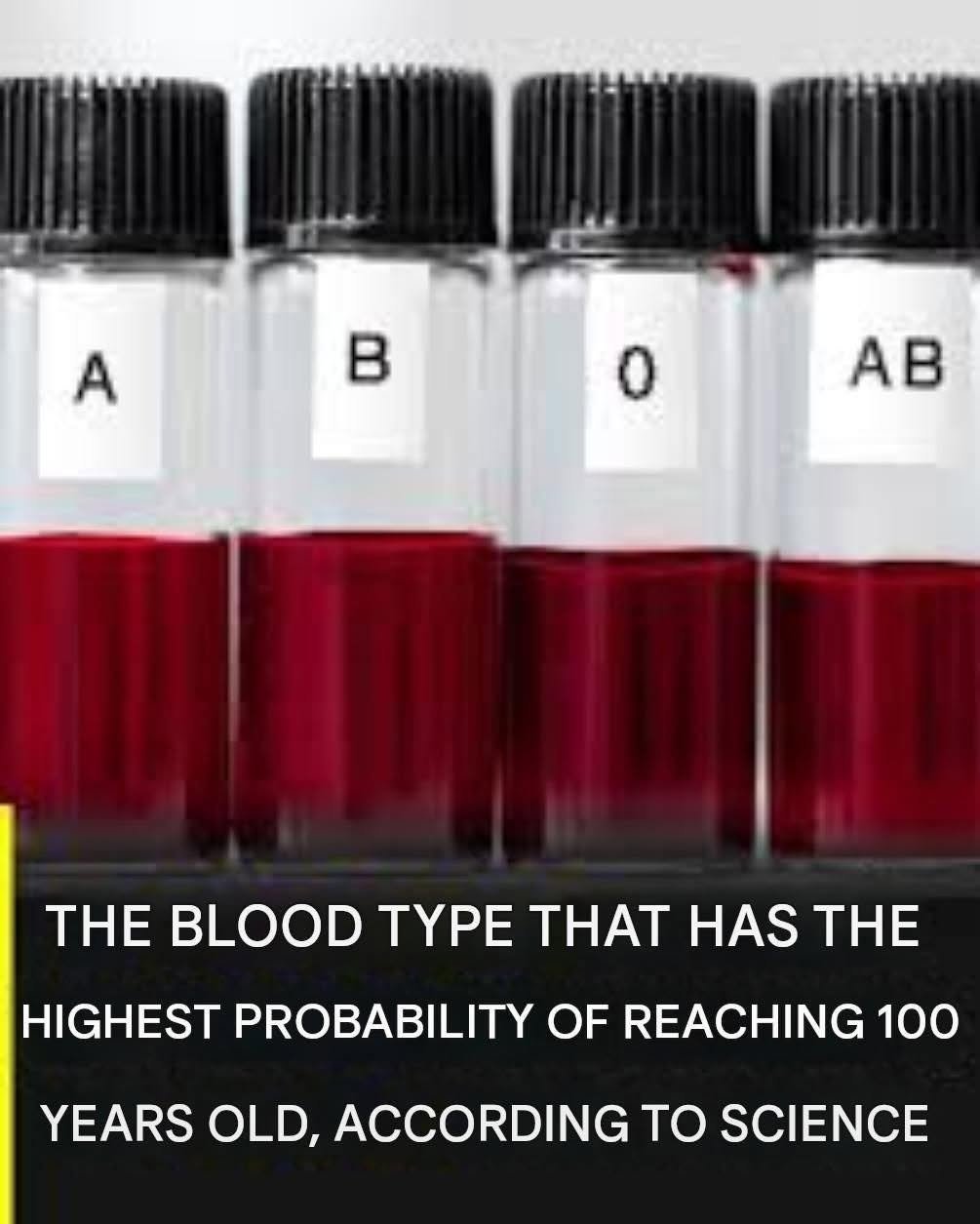
People With This Blood Type Are More Likely to Live to 100 Years Old — What Science Really Says
What if the secret to living to 100 years old was written in your blood type?
It is an intriguing idea, and one that has attracted attention from people interested in longevity, genetics, and healthy aging. Some studies have explored whether blood types are associated with particular diseases, raising questions about whether your blood group could influence how long you live.
But the truth is more complicated than a simple headline suggests.
No blood type has been conclusively proven to make a person more likely to live to 100 years old. Blood group may be associated with certain health risks, but reaching exceptional old age depends on many interacting factors, including genetics, lifestyle, environment, and access to healthcare.
Let’s look at what researchers know about blood types and longevity.
1. Does Blood Type Affect How Long You Live?
Human blood is commonly classified into four main ABO groups: A, B, AB, and O. Each group can also be Rh-positive or Rh-negative.
These differences are important for blood transfusions and can be associated with certain medical risks. For example, research has found associations between some ABO blood groups and cardiovascular conditions.
However, an association with a particular disease does not necessarily translate into a longer or shorter lifespan.
Researchers have not established a universally superior blood type for longevity. People with every blood group can live into their 90s and beyond.
2. Why Blood Type O Often Gets Attention
Blood type O is sometimes described online as a possible advantage for healthy aging.
One reason is that research has associated blood group O with a lower average risk of certain blood-clotting conditions compared with some non-O blood groups. Differences in von Willebrand factor and factor VIII, proteins involved in blood clotting, may help explain some of these findings.
However, blood group O has also been associated with a higher risk of certain bleeding conditions, and its relationship with other diseases varies.
The important distinction: A lower risk of one health condition does not prove that people with blood type O live longer overall or are more likely to reach 100.
3. What About Blood Types A, B, and AB?
Other blood groups have also been studied for possible associations with disease.
- Blood type A: Some research has found associations between blood group A and certain cardiovascular or cancer risks, but these findings do not establish a shorter lifespan for everyone with this group.
- Blood type B: Researchers have investigated possible links with metabolic and other health conditions, but the evidence does not show that blood type B determines longevity.
- Blood type AB: Some studies have identified associations between this group and certain health risks, including stroke-related outcomes. These associations do not establish whether people with AB blood are more or less likely to reach 100.
These patterns are statistical associations across populations. They cannot reliably predict an i