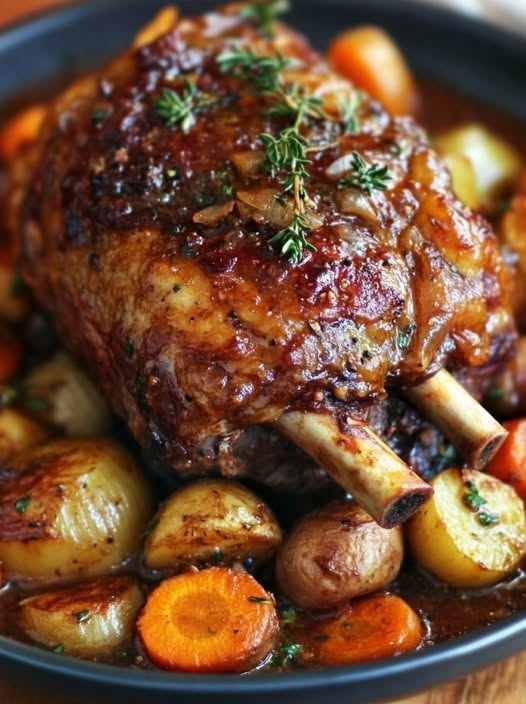
This Rustic Red Wine-Braised Lamb Shanks recipe is the kind of slow-cooked comfort food that fills the kitchen with an incredible aroma. Lamb shanks are browned until deeply caramelized, then slowly braised in red wine, stock, vegetables, garlic, and fresh herbs until the meat becomes exceptionally tender.
The finished dish is served with caramelized carrots, parsnips, and other root vegetables, all spooned with a rich, glossy herb-infused jus.
🍷 Recipe Overview
- Prep Time: 25 minutes
- Cook Time: 2½–3 hours
- Total Time: About 3 hours 20 minutes
- Servings: 4
- Course: Main Course
- Cuisine: Rustic European-inspired
- Difficulty: Moderate
Ingredients
For the Lamb Shanks
- 4 lamb shanks, about 12–16 oz each
- 2 teaspoons kosher salt
- 1 teaspoon freshly ground black pepper
- 2 tablespoons olive oil
- 1 large yellow onion, diced
- 2 carrots, diced
- 2 celery stalks, diced
- 5 garlic cloves, minced
- 2 tablespoons tomato paste
- 2 cups dry red wine
- 3 cups beef or lamb stock
- 2 bay leaves
- 4 sprigs fresh thyme
- 2 sprigs fresh rosemary
- 1 small handful fresh parsley stems
- 1 teaspoon Worcestershire sauce, optional
For the Caramelized Root Vegetables
- 3 carrots, cut into thick diagonal pieces
- 2 parsnips, peeled and cut into chunks
- 2 small turnips, peeled and quartered
- 1 small sweet potato, cut into large chunks
- 1½ tablespoons olive oil
- 1 tablespoon butter
- 1 tablespoon honey or maple syrup
- ½ teaspoon kosher salt
- ¼ teaspoon black pepper
- ½ teaspoon fresh thyme leaves
For the Herb-Infused Jus
- 1–2 cups strained braising liquid
- 1 tablespoon cold unsalted butter
- 1 teaspoon fresh thyme leaves
- 1 tablespoon chopped fresh parsley
- 1 teaspoon red wine vinegar, optional
Equipment
- Large Dutch oven or heavy oven-safe pot
- Large skillet
- Tongs
- Wooden spoon
- Fine-mesh strainer
- Baking sheet
- Small saucepan
- Ladle
Step 1: Prepare the Lamb
Pat the lamb shanks completely dry with paper towels.
This is important because dry meat browns much better than wet meat.
Season all sides generously with kosher salt and freshly ground black pepper.
Allow the lamb to sit at room temperature for approximately 15–20 minutes while you prepare the vegetables.
Step 2: Brown the Lamb Shanks
Preheat your oven to 325°F (165°C).
Place a large Dutch oven over medium-high heat and add the olive oil.
When the oil is hot, carefully add the lamb shanks.
Brown them in batches if necessary so you don’t overcrowd the pot.
Sear each side for approximately 3–4 minutes, turning until the lamb develops a deep golden-brown crust.
Don’t rush this stage.
The dark caramelized surface creates much of the rich flavor in the finished braise.
Transfer the browned lamb to a plate.
Step 3: Build the Aromatic Base
Reduce the heat to medium.
Add the diced onion, carrots, and celery to the same Dutch oven.
Cook for approximately 6–8 minutes, stirring occasionally, until the vegetables begin to soften and develop golden edges.
Add the minced garlic and cook for another 30–60 seconds.
Be careful not to burn the garlic.
Step 4: Add Tomato Paste
Stir in the tomato paste.
Cook for approximately 2 minutes, stirring constantly.
The tomato paste should darken slightly and become fragrant.
This extra cooking step removes its raw taste and adds a deeper savory character to the braising liquid.
Step 5: Deglaze With Red Wine
Slowly pour in the red wine.
Use a wooden spoon to scrape the bottom of the Dutch oven, loosening all the browned bits.
Those browned bits are packed with flavor.
Bring the wine to a gentle simmer and cook for approximately 5–7 minutes.
This reduces the wine slightly and concentrates its flavor.
Step 6: Add Stock and Herbs
Return the browned lamb shanks to the Dutch oven.
Add enough stock to come approximately halfway to two-thirds of the way up the lamb.
Add:
- Bay leaves
- Thyme
- Rosemary
- Parsley stems
- Worcestershire sauce, if using
Bring the liquid to a gentle simmer.
Don’t allow it to boil aggressively.
Step 7: Slow-Braise the Lamb
Cover the Dutch oven tightly with its lid.
Transfer it to the preheated oven.
Braise for approximately 2½–3 hours.
Turn the lamb shanks once or twice during cooking.
The lamb is ready when a fork slides easily into the meat and the meat is beginning to pull away from the bone.
If the lamb still feels tough after 2½ hours, continue cooking.
Tough lamb usually needs more time, not higher heat.
Step 8: Prepare the Root Vegetables
While the lamb braises, prepare the vegetables.
Preheat a large skillet over medium-high heat.
Add the olive oil and butter.
Add the carrots, parsnips, turnips, and sweet potato.
Season with salt and black pepper.
Cook for approximately 8–10 minutes, turning occasionally, until the vegetables develop golden-brown edges.
Add the honey or maple syrup and fresh thyme.
Reduce the heat slightly.
Continue cooking for another 3–5 minutes, tossing frequently, until the vegetables are beautifully caramelized and tender.
If they begin browning too quickly, add a tablespoon or two of water or stock and continue cooking.
Step 9: Rest the Lamb
When the lamb is tender, carefully remove the shanks from the Dutch oven.
Place them on a plate and loosely cover with foil.
Let them rest while you prepare the jus.
Step 10: Strain the Braising Liquid
Pour the braising liquid through a fine-mesh strainer into a saucepan or bowl.
Press gently on the vegetables with the back of a spoon to extract their juices.
Discard the solids, bay leaves, and herb stems.
For an even richer sauce, allow the strained liquid to sit for a few minutes and skim away excess fat from the surface.
Step 11: Reduce the Jus
Place the strained liquid over medium-high heat.
Simmer for approximately 10–15 minutes, or until the liquid has reduced and become concentrated.
You want a sauce that lightly coats the back of a spoon.
Taste and adjust the seasoning.
If the sauce tastes too rich, add a small splash of red wine vinegar.
If it needs more richness, continue reducing.
Step 12: Finish With Butter and Fresh Herbs
Remove the saucepan from the heat.
Whisk in the cold butter a little at a time.
This gives the jus a glossy texture and rounded flavor.
Stir in the fresh thyme and chopped parsley.
Taste again and adjust the salt and pepper if necessary.
Step 13: Plate the Lamb
Place one lamb shank on each serving plate.
Arrange a generous portion of the caramelized root vegetables alongside the lamb.
Spoon the herb-infused jus over the lamb.
For a beautiful finishing touch, sprinkle with fresh parsley and thyme.
Serve immediately.
What Makes This Recipe Special?
Deeply browned lamb
The initial searing creates a flavorful crust and gives the braising liquid a much deeper flavor.
Red wine braising liquid
Dry red wine contributes acidity, fruitiness, and complexity while helping balance the richness of the lamb.
Caramelized vegetables
Roasting or sautéing the root vegetables separately allows them to develop browned edges instead of becoming overly soft in the braising liquid.
Herb-infused jus
Straining and reducing the braising liquid transforms it into a concentrated sauce that brings the entire dish together.
Best Red Wine to Use
Choose a dry, full-bodied red wine that you would actually enjoy drinking.
Good choices include:
- Cabernet Sauvignon
- Merlot
- Syrah/Shiraz
- Malbec
- Cabernet Franc
Avoid very sweet wines for this recipe.
A useful rule is: don’t cook with a wine you wouldn’t drink.
Recipe Tips
Don’t skip the searing
The lamb should have a rich brown crust before braising. This creates much of the dish’s savory depth.
Don’t drown the lamb
The stock should come only partway up the shanks. Braising is different from boiling.
Keep the oven temperature moderate
A gentle braise allows the connective tissue in the lamb to slowly break down without drying the meat.
Check the liquid level
If the braising liquid evaporates too quickly, add a little more stock.
Make the jus ahead
The braising liquid can be prepared a day ahead. After chilling, the fat will solidify on the surface and can be removed easily before reheating and reducing the sauce.
Make-Ahead Instructions
This recipe is excellent for entertaining because the lamb can actually taste even better the next day.
Prepare the lamb completely, allow it to cool, and refrigerate it in the braising liquid.
The next day, remove the solidified fat from the surface.
Gently reheat the lamb in the sauce at 300°F (150°C) until hot and tender.
Prepare the caramelized root vegetables shortly before serving.
Finish the jus just before plating.
Storage
Store leftover lamb and sauce in an airtight container in the refrigerator for up to 3–4 days.
The lamb can also be frozen with some of the braising liquid for up to 3 months.
Thaw overnight in the refrigerator and reheat gently.
What to Serve With Lamb Shanks
This dish pairs beautifully with:
- Creamy mashed potatoes
- Celery root purée
- Parmesan polenta
- Buttered egg noodles
- Crusty sourdough bread
- Creamy cauliflower purée
- Roasted Brussels sprouts
- Simple green salad
For the ultimate comfort-food presentation, serve the lamb over creamy mashed potatoes so the jus can soak into the potatoes.
Frequently Asked Questions
Can I use lamb shoulder instead of shanks?
Yes. Lamb shoulder works very well for slow braising, although the cooking time may vary depending on the size of the cut.
Can I make this without wine?
Yes. Replace the wine with additional stock and add a small amount of balsamic vinegar or red wine vinegar for acidity.
The flavor will be different but still delicious.
Why is my lamb tough?
If the lamb is tough but the braising liquid hasn’t dried out, it probably needs more cooking time. Lamb shanks become tender when their connective tissue has had enough time to break down.
Can I use a slow cooker?
Yes. Brown the lamb and vegetables first, then transfer everything to a slow cooker. Cook on LOW for approximately 7–8 hours, or until fork-tender.
Can I use baby carrots?
Absolutely. Whole baby carrots work especially well for the caramelized vegetable component.
Approximate Nutrition
Per serving, assuming four servings:
- Calories: 700–800
- Protein: 45–50 g
- Carbohydrates: 35–45 g
- Fat: 35–45 g
- Saturated Fat: 14–18 g
- Fiber: 6–8 g
- Sugar: 12–16 g
- Sodium: 700–900 mg
Nutrition will vary depending on the size of the lamb shanks, amount of sauce consumed, and specific ingredients used.
Final Thoughts
This Rustic Red Wine-Braised Lamb Shanks with Caramelized Root Vegetables & Herb-Infused Jus is a slow-cooked centerpiece made for cozy dinners and special occasions. The lamb becomes incredibly tender, the root vegetables develop sweet caramelized edges, and the reduced wine-and-herb jus adds a luxurious finish.