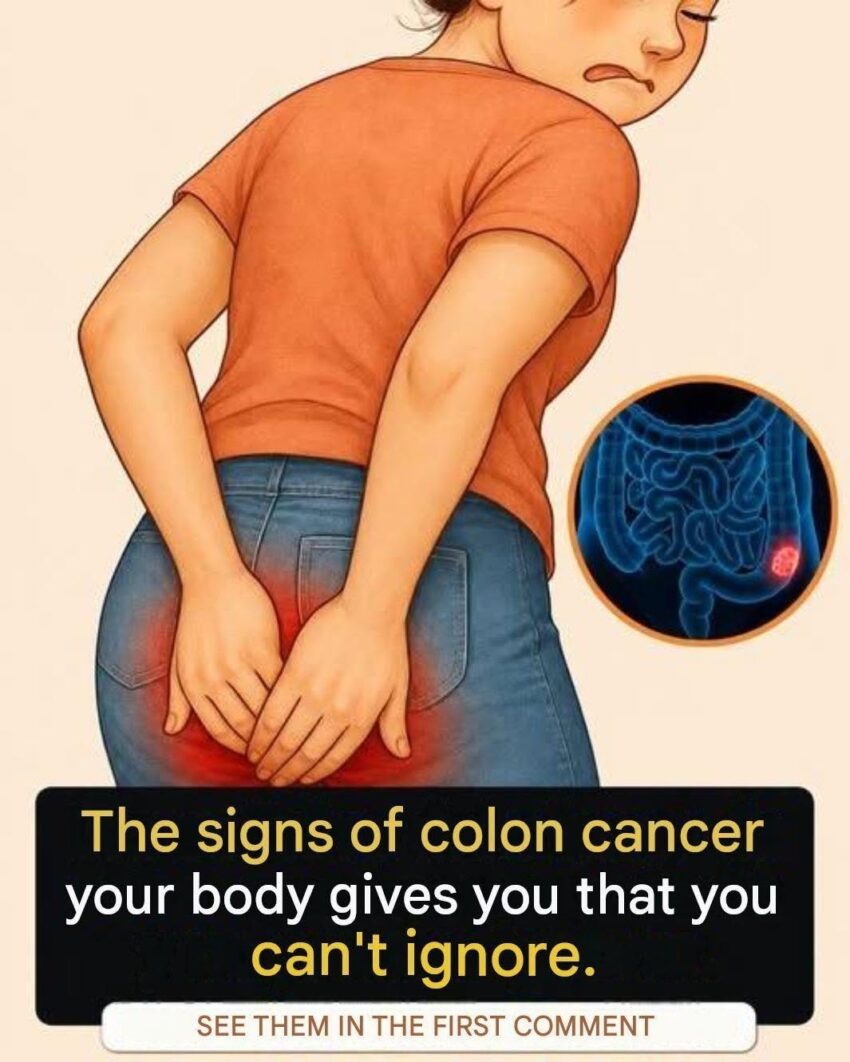
You May Have Colon Cancer If… Warning Signs You Shouldn’t Ignore
Colon cancer, also called colorectal cancer, can develop gradually and may not cause noticeable symptoms in its early stages. Knowing the warning signs can help you seek medical attention sooner. However, having these symptoms does not automatically mean you have cancer because many other conditions can cause similar problems.
1. You Notice Blood in Your Stool
One of the warning signs of colorectal cancer can be blood in or on the stool. The blood may appear bright red, dark red, or sometimes make the stool look unusually dark.
Bleeding can also be caused by hemorrhoids, anal fissures, infections, or other digestive conditions, so it is important to have unexplained bleeding evaluated by a healthcare professional.
2. Your Bowel Habits Change
Pay attention to a bowel-habit change that persists, such as:
- Frequent diarrhea
- Persistent constipation
- Stools becoming narrower than usual
- Alternating constipation and diarrhea
- A change in how often you have bowel movements
A temporary change is usually less concerning, but a persistent or unexplained change deserves medical evaluation.
3. You Have Persistent Abdominal Discomfort
Colon cancer can sometimes cause abdominal symptoms such as:
- Cramping
- Bloating
- Gas
- Abdominal pain
- A feeling of fullness or pressure
These symptoms are common and have many possible causes. Persistent or worsening discomfort should be discussed with a doctor.
4. You Lose Weight Without Trying
Unexplained weight loss can be a warning sign of several medical conditions, including cancer. If you are losing weight without changing your diet or exercise routine, make an appointment with a healthcare professional.
5. You Feel Extremely Tired or Weak
Colon cancer can cause slow blood loss from the digestive tract, potentially leading to iron-deficiency anemia. This may result in unusual tiredness, weakness, dizziness, or shortness of breath.
Anemia has many causes, so testing is needed to determine why it is happening.
6. You Feel Like You Still Need to Go
Another possible symptom is tenesmus—the feeling that you need to have a bowel movement even after you have already gone. This sensation can occur for many reasons, but persistent symptoms should be checked.
Who Should Be More Careful?
Risk increases with age, but younger adults can also develop colorectal cancer. Risk can be higher if you have a family history of colorectal cancer or certain inherited conditions, inflammatory bowel disease, or other risk factors.
Screening can detect colorectal cancer early and can also find certain precancerous polyps before they become cancer.
When Should You See a Doctor?
Don’t ignore symptoms that are persistent, worsening, or unusual for you. Blood in the stool, unexplained weight loss, ongoing changes in bowel habits, or symptoms of anemia should be discussed with a healthcare professional.
If you have severe abdominal pain, heavy rectal bleeding, fainting, or significant weakness, seek urgent medical care.
The Bottom Line
Having one or more of these symptoms doesn’t mean you have colon cancer. But your body can sometimes give you important warning signs. Early evaluation and appropriate screening can make a significant difference.
If you’re concerned about symptoms, don’t try to diagnose yourself online. Talk to a qualified healthcare professional and ask whether colorectal cancer screening or diagnostic testing is appropriate for you.
This article is for general education and is not a substitute for medical diagnosis or treatment.