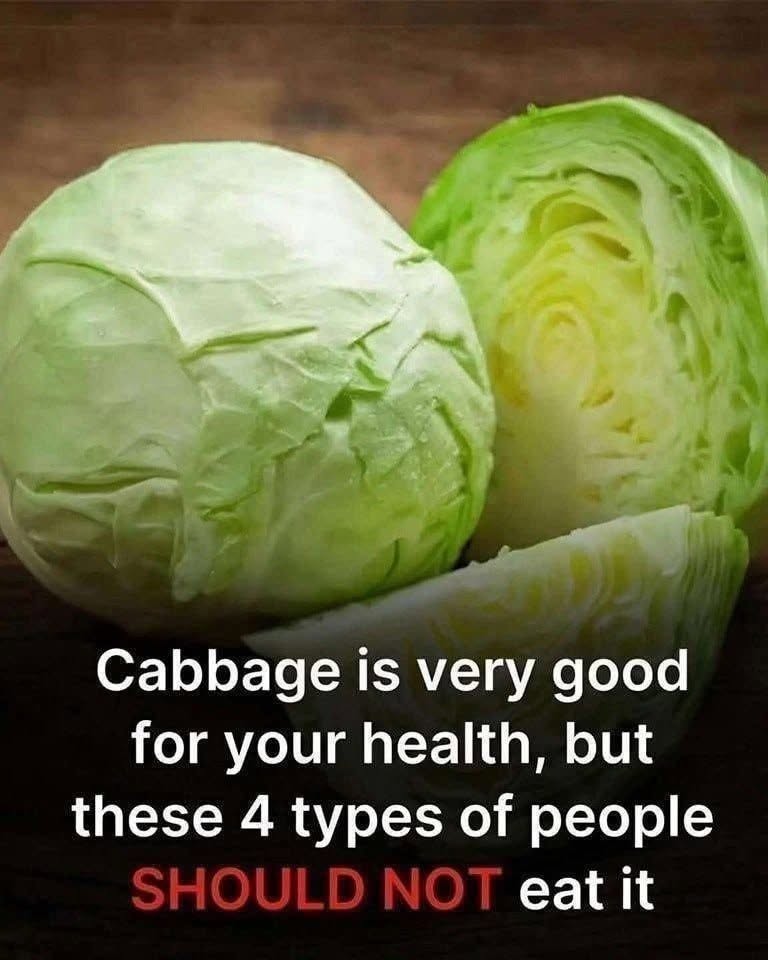
4 Types of People Who Should Be Careful About Eating Cabbage
Cabbage is a nutritious vegetable packed with fiber, vitamin C and other beneficial plant compounds. For most people, it can be part of a healthy diet.
But that doesn’t mean everyone should eat unlimited amounts of it.
For certain people, cabbage can worsen digestive symptoms, interact with medication, or become a concern in specific medical circumstances. Here are four groups who should be particularly careful.
1. People With IBS or Sensitive Digestion
Cabbage can cause gas, bloating and abdominal discomfort in some people.
This is especially relevant for people with irritable bowel syndrome (IBS), because cabbage is among the foods that can trigger or worsen symptoms in some individuals.
If you notice that cabbage consistently causes bloating, cramping or changes in your bowel habits, try reducing the portion rather than assuming you must permanently eliminate it.
Cooking cabbage thoroughly and eating a smaller serving may also be easier to tolerate.
2. People Taking Warfarin
If you take the blood thinner warfarin, don’t suddenly make large changes to the amount of vitamin-K-containing vegetables in your diet.
Vitamin K can affect how warfarin works. Health authorities recommend keeping your vitamin K intake relatively consistent rather than completely avoiding vitamin-K-rich foods.
So if cabbage is already part of your regular diet, talk with your healthcare professional before making a major change in how much you eat.
Never stop or change your blood thinner on your own.
3. People With Iodine Deficiency or Certain Thyroid Concerns
Cabbage belongs to the cruciferous vegetable family. These vegetables contain compounds known as goitrogens, which can interfere with iodine utilization.
For most people who get enough iodine, eating reasonable amounts of cabbage is not considered a problem. However, people with inadequate iodine intake may need to be more cautious, particularly if they have a thyroid condition.
This doesn’t mean that everyone with a thyroid disorder needs to eliminate cabbage. In many cases, moderate portions are perfectly reasonable.
If you have thyroid disease, ask your doctor or dietitian what amount is appropriate for you.
4. People Who Notice Cabbage Consistently Triggers Their Symptoms
Food tolerance is highly individual.
Even if cabbage is considered healthy, it may not agree with everyone. People who repeatedly experience significant gas, bloating, abdominal pain or diarrhea after eating it should pay attention to that pattern.
Instead of following a blanket “never eat cabbage” rule, consider keeping a simple food diary and discussing persistent symptoms with a healthcare professional.
Should You Stop Eating Cabbage?
For most healthy people, no.
Cabbage can be a nutritious addition to meals, and there is no good reason for most people to avoid it simply because of its vitamin K or cruciferous-vegetable content.
The important thing is context.
If you’re taking warfarin, have significant digestive symptoms, or have a thyroid or iodine-related concern, your dietary needs may be different.
And remember: “healthy food” doesn’t mean “healthy in unlimited amounts for everyone.”
If cabbage causes you problems repeatedly, don’t ignore the pattern. A healthcare professional can help determine whether cabbage itself is responsible—or whether another underlying condition is causing your symptoms.
Bottom line: Cabbage is healthy for most people, but certain individuals may need to limit it, keep their intake consistent, or seek personalized medical advice rather than eliminating it unnecessarily.