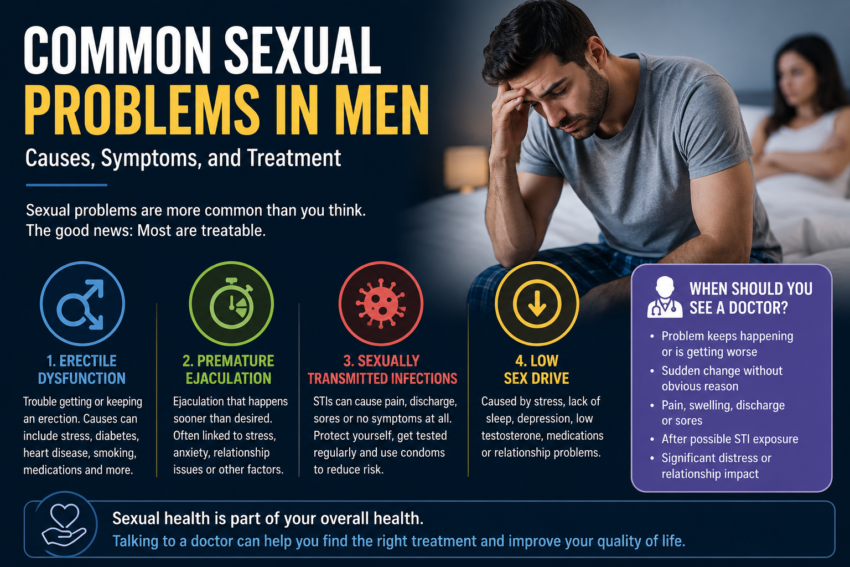
Common Sexual Problems in Men: Causes, Symptoms, and Treatment
Sexual health is an important part of a man’s overall well-being. Problems with sexual function are common, but many men avoid talking about them because of embarrassment or shame.
Occasional difficulties can happen because of stress, tiredness, or anxiety. However, when a problem keeps happening, it may be worth discussing with a healthcare professional.
1. Erectile Dysfunction
Erectile dysfunction (ED) means having difficulty getting or maintaining an erection firm enough for sexual activity.
Possible causes include diabetes, high blood pressure, cardiovascular disease, obesity, smoking, certain medications, stress, anxiety, and other health conditions.
Persistent ED should not simply be dismissed as a normal part of aging. In some cases, it can be associated with underlying health problems.
2. Premature Ejaculation
Premature ejaculation occurs when ejaculation happens sooner than desired and causes distress or frustration.
It can be associated with performance anxiety, stress, relationship difficulties and other psychological or physical factors.
Treatment depends on the underlying cause and may include counseling, behavioral techniques, or medication recommended by a healthcare professional.
3. Sexually Transmitted Infections
Sexually transmitted infections (STIs) can spread through sexual contact. Examples include chlamydia, gonorrhea, syphilis, genital herpes and HIV.
Possible symptoms include:
- Burning or pain when urinating
- Unusual genital discharge
- Sores or blisters
- Itching or irritation
- Pain in the genital area
However, many STIs can cause no noticeable symptoms. If you have had a potential exposure, testing is important even if you feel completely healthy.
Using condoms correctly and consistently can reduce the risk of many STIs.
4. Low Sex Drive
A reduced interest in sex can have many possible causes.
Stress, lack of sleep, depression, relationship problems, certain medications, alcohol use and hormonal changes can all affect sexual desire.
Low libido does not automatically mean that testosterone is low. A healthcare professional can help determine the underlying cause and recommend appropriate treatment.
When Should You See a Doctor?
Consider speaking with a healthcare professional if a sexual problem:
- Keeps happening or is getting worse
- Begins suddenly without an obvious reason
- Causes significant distress
- Is accompanied by pain, swelling or injury
- Involves unusual genital discharge or sores
- Follows a possible STI exposure
Avoid taking unregulated “sexual enhancement” pills or supplements without medical advice. Some products sold online may contain undisclosed ingredients or interact dangerously with other medicines.
The Bottom Line
Sexual difficulties are common and nothing to be ashamed of. The right treatment depends on the cause, and many sexual health problems can be managed successfully.
If you’re experiencing a persistent problem, talking honestly with a qualified healthcare professional is one of the best steps you can take.
Your sexual health is part of your overall health—and asking for help is a sign of taking care of yourself, not a weakness.