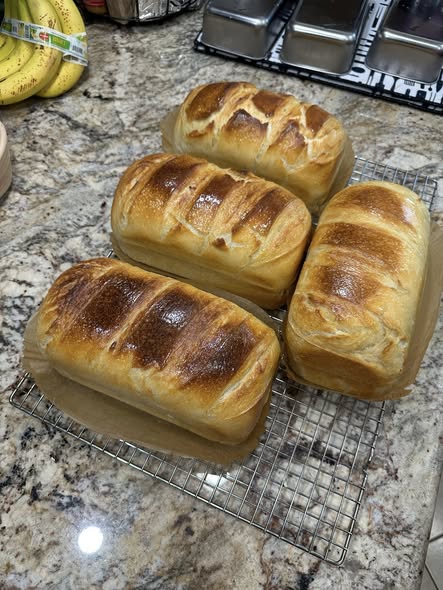
Ingredients
-
Active sourdough starter – 100g (fed 4–12 hours earlier, bubbly and passes float test)
-
Water – 300g (lukewarm, about 85–90°F / 29–32°C)
-
Bread flour – 400g (12–13% protein works best; can sub up to 20% whole wheat)
-
Salt – 8g (fine sea salt or kosher)
Hydration: ~75% (adjust water up/down by 10–20g depending on flour)
Timeline (total ~24–30 hours)
| Step | Time |
|---|---|
| Mix dough | Day 1, morning |
| Bulk ferment | 4–6 hours |
| Shape & cold proof | Overnight (8–16 hours) |
| Bake | Day 2, morning |
Method
1. Mix dough (autolyse optional)
Whisk starter into water until milky. Add flour and mix by hand until no dry bits remain. Cover and rest 30–60 minutes (autolyse). Then add salt and a splash of water, squeeze in until fully combined.
2. Bulk fermentation (4–6 hours at 70–75°F / 21–24°C)
Perform 4 sets of stretch and folds every 30 minutes for the first 2 hours. Then let dough rest untouched for remaining time.
Signs bulk is done:
-
+30–50% volume increase (not doubled)
-
Bubbles on surface and sides
-
Jiggly, domed top, pulls away from bowl cleanly
3. Shape the dough
Turn dough onto lightly floured surface. Pre-shape into a round, rest 20 minutes. Final shape into a boule (tight ball) or batard (oval). Place seam-side up into a floured banneton or a bowl lined with a floured tea towel.
4. Cold proof (8–16 hours in refrigerator)
Cover and refrigerate. This develops flavor and makes scoring easier.
5. Bake
Preheat Dutch oven to 475°F (245°C) for 45 minutes.
-
Turn dough out onto parchment paper.
-
Score with a lame or sharp knife (one deep slash, or decorative pattern).
-
Transfer (with parchment) into hot Dutch oven, cover, and bake 20 minutes.
-
Remove lid, reduce heat to 450°F (230°C), bake another 20–25 minutes until deep golden brown.
6. Cool
Do not cut for at least 1–2 hours – the crumb finishes setting as it cools.