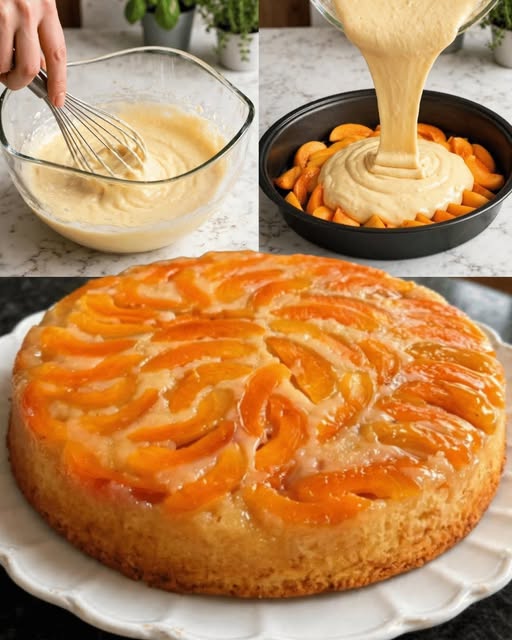
This Caramelized Apricot Kefir Cake is a tender, moist fruit cake made with tangy kefir, buttery caramelized apricots, and a soft vanilla-scented crumb. As the cake bakes, the apricots soften into the caramel topping, creating beautiful golden edges and a rich fruity flavor.
It is delicious served slightly warm, at room temperature, or chilled with a spoonful of whipped cream or vanilla ice cream.
🍑 Recipe Overview
- Prep Time: 20 minutes
- Cook Time: 40–50 minutes
- Total Time: About 1 hour 10 minutes
- Servings: 8–10
- Course: Dessert
- Cuisine: American-inspired
- Difficulty: Easy
Ingredients
For the Caramelized Apricots
- 6–8 fresh apricots, halved and pitted
- 4 tablespoons unsalted butter
- ½ cup brown sugar
- 2 tablespoons granulated sugar
- 1 teaspoon vanilla extract
- ¼ teaspoon ground cinnamon
- Pinch of salt
- 1 tablespoon lemon juice
For the Kefir Cake
- 1¾ cups all-purpose flour
- 1½ teaspoons baking powder
- ½ teaspoon baking soda
- ¼ teaspoon salt
- ½ cup unsalted butter, softened
- ¾ cup granulated sugar
- 2 large eggs, room temperature
- 1 teaspoon vanilla extract
- ¾ cup plain kefir
- 1 tablespoon lemon zest
- 2 tablespoons fresh lemon juice
Optional Topping
- Powdered sugar
- Whipped cream
- Vanilla ice cream
- Chopped toasted almonds
- Fresh apricot slices
- A little extra lemon zest
Equipment
- 9-inch round cake pan
- Mixing bowls
- Electric hand mixer or stand mixer
- Small saucepan or skillet
- Spatula
- Measuring cups and spoons
- Parchment paper
- Wire cooling rack
How to Make Caramelized Apricot Kefir Cake
1. Prepare the Apricots
Wash the apricots thoroughly and pat them dry.
Cut each apricot in half and remove the pit. If your apricots are particularly large, you can cut them into quarters.
For the best result, choose apricots that are ripe but still slightly firm. Very soft apricots can become mushy during baking.
2. Make the Caramel
Place a skillet or small saucepan over medium heat.
Add the butter and allow it to melt. Stir in the brown sugar, granulated sugar, cinnamon, and salt.
Cook for about 2–3 minutes, stirring frequently, until the sugar melts and the mixture becomes glossy.
Add the lemon juice and vanilla extract. Stir carefully because the mixture may bubble.
Remove from the heat.
3. Arrange the Apricots
Preheat your oven to 350°F (175°C).
Grease a 9-inch round cake pan and line the bottom with parchment paper.
Pour the warm caramel mixture into the bottom of the prepared pan.
Arrange the apricot halves cut-side down over the caramel.
Try to arrange them fairly close together so that each slice of cake contains a generous amount of fruit.
Set the pan aside while you prepare the batter.
4. Mix the Dry Ingredients
In a medium bowl, whisk together:
- Flour
- Baking powder
- Baking soda
- Salt
Whisking helps distribute the leavening ingredients evenly throughout the flour.
Set aside.
5. Cream the Butter and Sugar
In a large mixing bowl, beat the softened butter and granulated sugar for approximately 3–4 minutes.
The mixture should become pale, light, and fluffy.
This step helps incorporate air into the batter and contributes to a lighter cake texture.
6. Add the Eggs
Add the eggs one at a time, beating well after each addition.
Add the vanilla extract and lemon zest.
If the mixture looks slightly curdled, don’t worry. It will come together once the flour is incorporated.
7. Add the Kefir
Add about one-third of the dry ingredients to the butter mixture.
Mix gently.
Add half of the kefir and mix again.
Continue alternating the dry ingredients and kefir, finishing with the remaining dry ingredients.
Add the lemon juice and gently fold everything together.
Important Tip
Don’t overmix the batter. Stop mixing as soon as you no longer see streaks of dry flour.
Overmixing can make the finished cake dense rather than tender.
8. Pour the Batter Over the Apricots
Carefully spoon the cake batter over the arranged apricots.
Use a spatula to gently spread the batter into an even layer.
Try not to disturb the apricots underneath.
9. Bake
Place the cake in the preheated oven.
Bake for approximately 40–50 minutes, depending on your oven and the moisture content of the fruit.
The cake is ready when:
- The top is golden brown.
- The center feels lightly springy.
- A toothpick inserted into the cake portion comes out clean or with a few moist crumbs.
- The edges begin pulling slightly away from the pan.
If the top begins browning too quickly, loosely cover it with aluminum foil during the final 10–15 minutes.
10. Cool Briefly
Remove the cake from the oven and let it rest in the pan for about 10–15 minutes.
Don’t allow it to cool completely in the pan because the caramel can become firm and make the cake difficult to release.
Run a thin knife around the edge of the cake.
Place a serving plate upside down over the cake pan.
Carefully but confidently invert the cake onto the plate.
Slowly lift the pan away.
The caramelized apricots should now be beautifully displayed on top.
If a little caramel remains in the pan, simply spoon it over the cake.
Why Kefir Works So Well in This Cake
Kefir gives this cake its exceptionally tender texture.
Its natural acidity works with the baking soda and baking powder to help the cake rise while also producing a soft, moist crumb.
Kefir also adds a subtle tang that balances the sweetness of the caramelized fruit.
If you don’t have kefir, plain buttermilk can generally be used as a substitute in the same quantity.
How to Serve
This cake is particularly delicious while slightly warm.
Try serving each slice with:
- A scoop of vanilla ice cream
- Whipped cream
- Greek yogurt
- A dusting of powdered sugar
- Toasted sliced almonds
- A drizzle of leftover caramel sauce
For a simple presentation, place a slice on a plate and add a small spoonful of lightly sweetened whipped cream.
Recipe Tips
Use ripe but firm apricots
Soft apricots contain more juice and can make the topping excessively wet. Firm-ripe fruit holds its shape better during baking.
Don’t skip the lemon
The lemon juice and zest brighten the flavor and help balance the buttery caramel.
Use room-temperature ingredients
Room-temperature eggs, butter, and kefir combine more easily and produce a smoother batter.
Watch the caramel
Sugar can burn quickly. Keep the heat around medium and stir frequently.
Let the cake rest before flipping
Ten to fifteen minutes is usually enough. Flipping immediately can cause the cake to break, while waiting too long can allow the caramel to stick to the pan.
Variations
Almond Apricot Cake
Add ½ teaspoon almond extract to the batter and sprinkle ¼ cup sliced almonds over the caramel before arranging the apricots.
Ginger Apricot Cake
Add ½ teaspoon ground ginger to the dry ingredients for a warm, slightly spicy flavor.
Orange Apricot Cake
Replace the lemon zest with orange zest and add 1 tablespoon fresh orange juice to the batter.
Cardamom Apricot Cake
Add ¼ teaspoon ground cardamom along with the cinnamon. Cardamom pairs beautifully with apricots.
Peach Version
If apricots aren’t available, substitute ripe peaches or nectarines. Cut them into thick wedges before arranging them over the caramel.
Storage
Store leftover cake covered at room temperature for up to 2 days.
For longer storage, refrigerate it in an airtight container for up to 4–5 days.
Allow refrigerated slices to come closer to room temperature before serving, or warm them gently in the microwave for a few seconds.
The cake can also be frozen. Wrap individual slices tightly and freeze for up to 2 months. Thaw overnight in the refrigerator and bring to room temperature before serving.
Frequently Asked Questions
Can I use dried apricots?
Fresh apricots are strongly recommended for this recipe. Dried apricots have a very different moisture level and won’t create the same caramelized fruit topping.
Can I use plain yogurt instead of kefir?
Yes. Thin the yogurt with a small amount of milk if it is very thick so that it has a consistency similar to kefir.
Why did my cake stick to the pan?
The caramel can become sticky as it cools. Make sure the pan is well greased, use parchment on the bottom, and invert the cake while it is still slightly warm.
Can I make this cake in a square pan?
Yes. An 8- or 9-inch square pan can work, although the baking time may vary slightly depending on the depth of the batter.
Can I make it ahead?
Absolutely. The cake can be baked several hours before serving. In fact, allowing the flavors to settle for a little while can make the cake even more delicious.
Nutrition Information
Approximate per serving, assuming 10 servings:
- Calories: 340
- Carbohydrates: 47 g
- Protein: 5 g
- Fat: 16 g
- Saturated Fat: 9 g
- Sugar: 29 g
- Fiber: 2 g
- Sodium: 220 mg
Actual nutrition values will vary depending on the size of the apricots, brands of ingredients, and serving size.